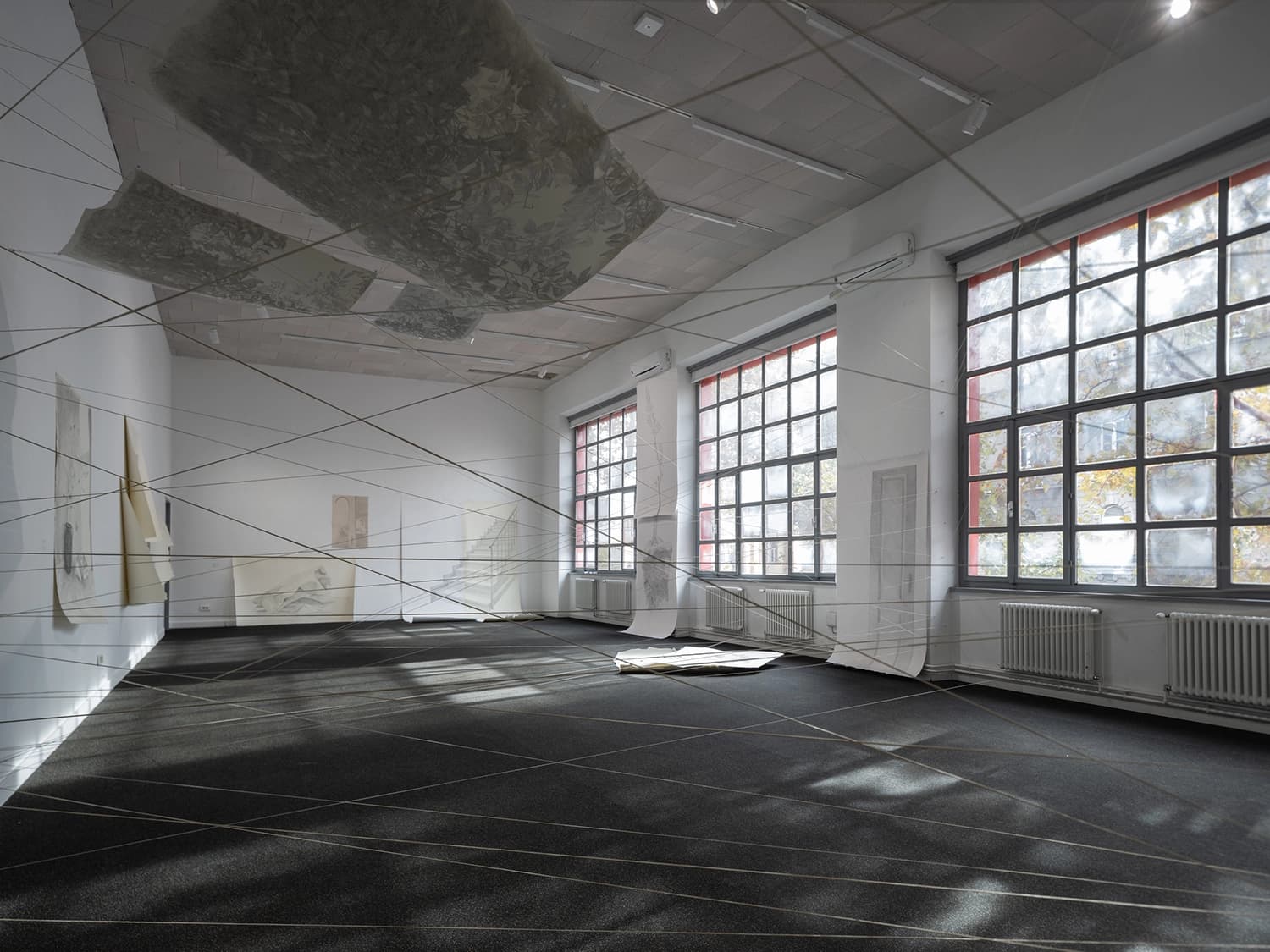
House Without a Ground
Drawing installation
Pencil on paper
Various dimesions
Pencil on paper
2022
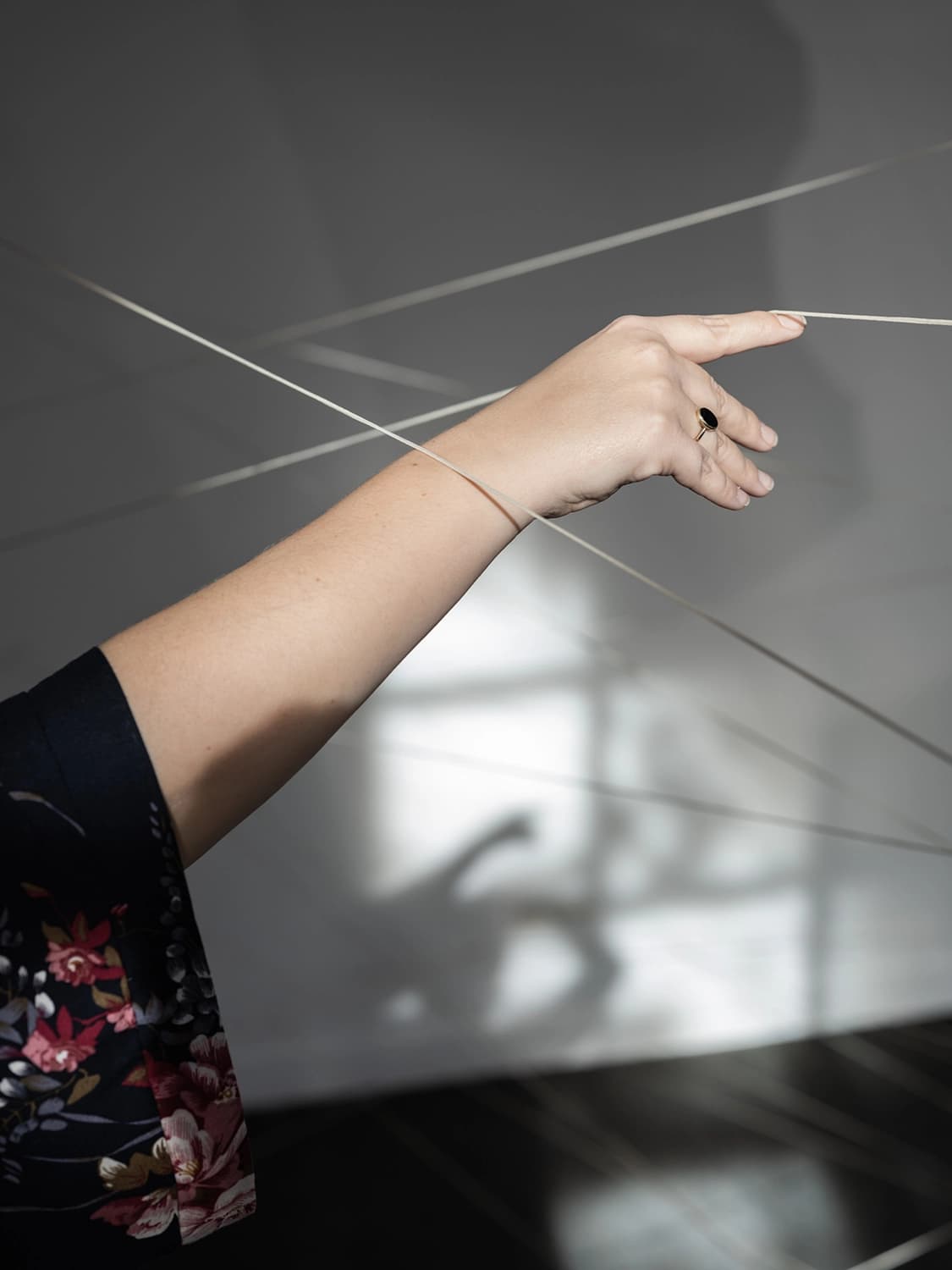
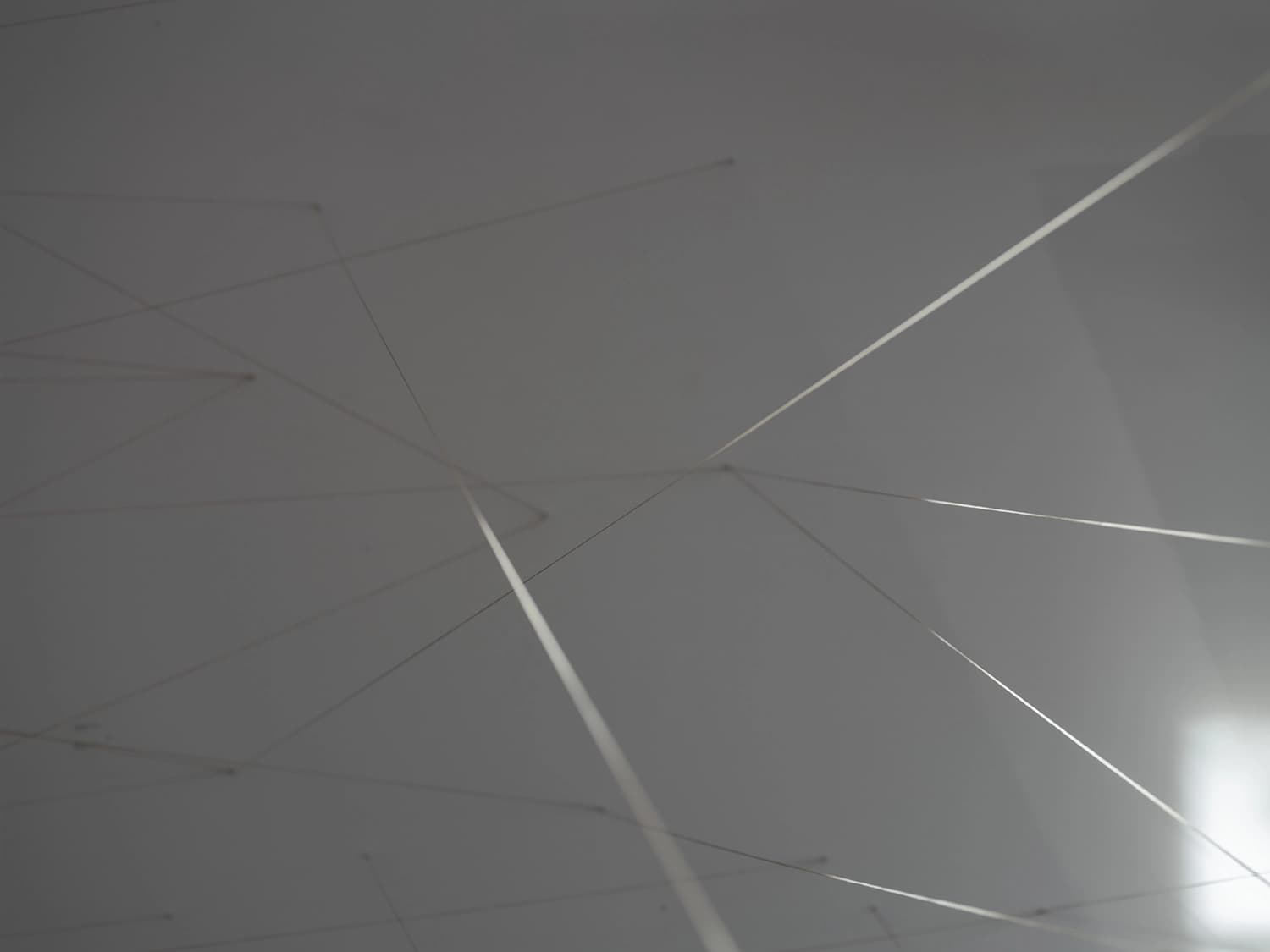
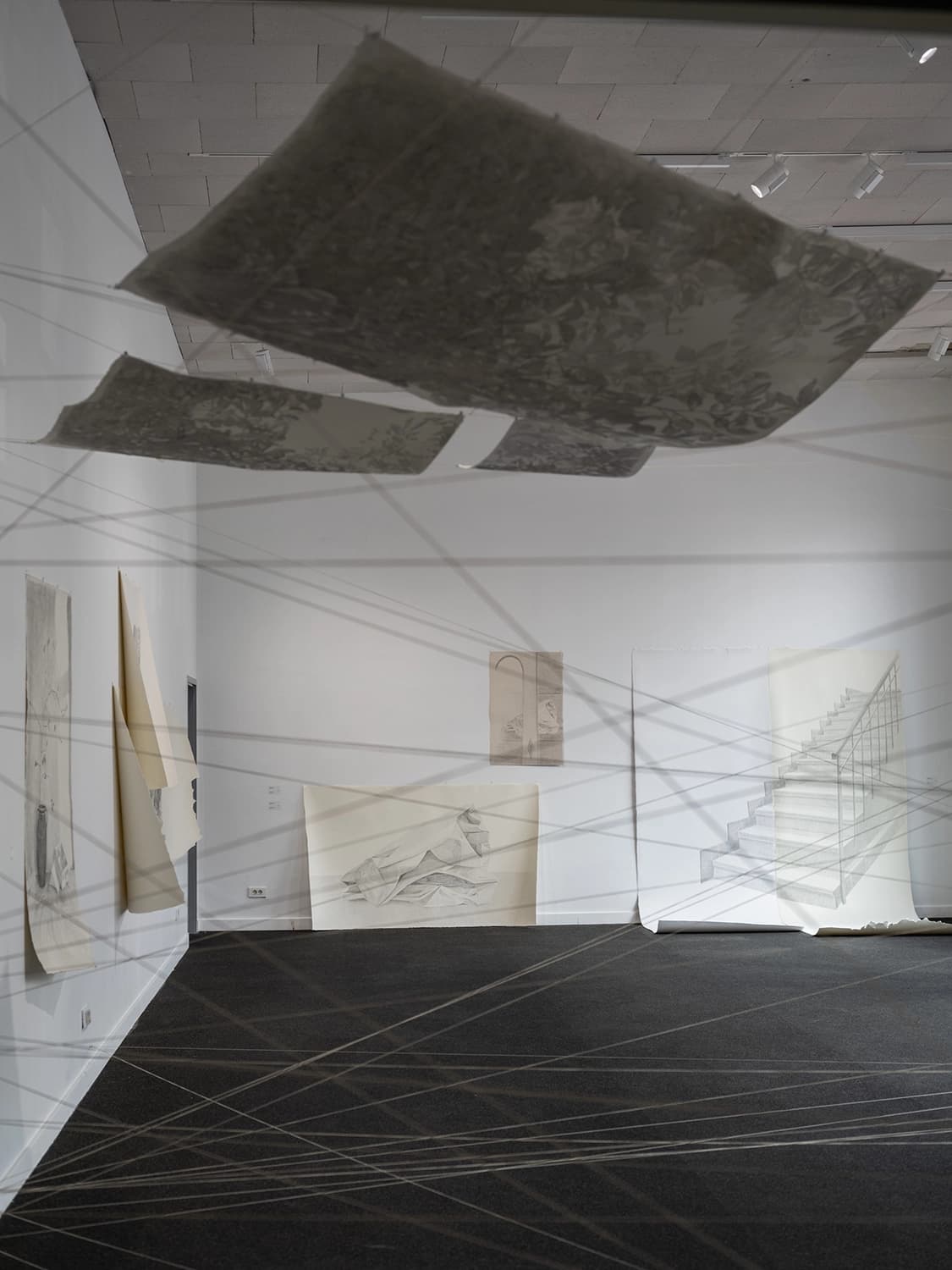
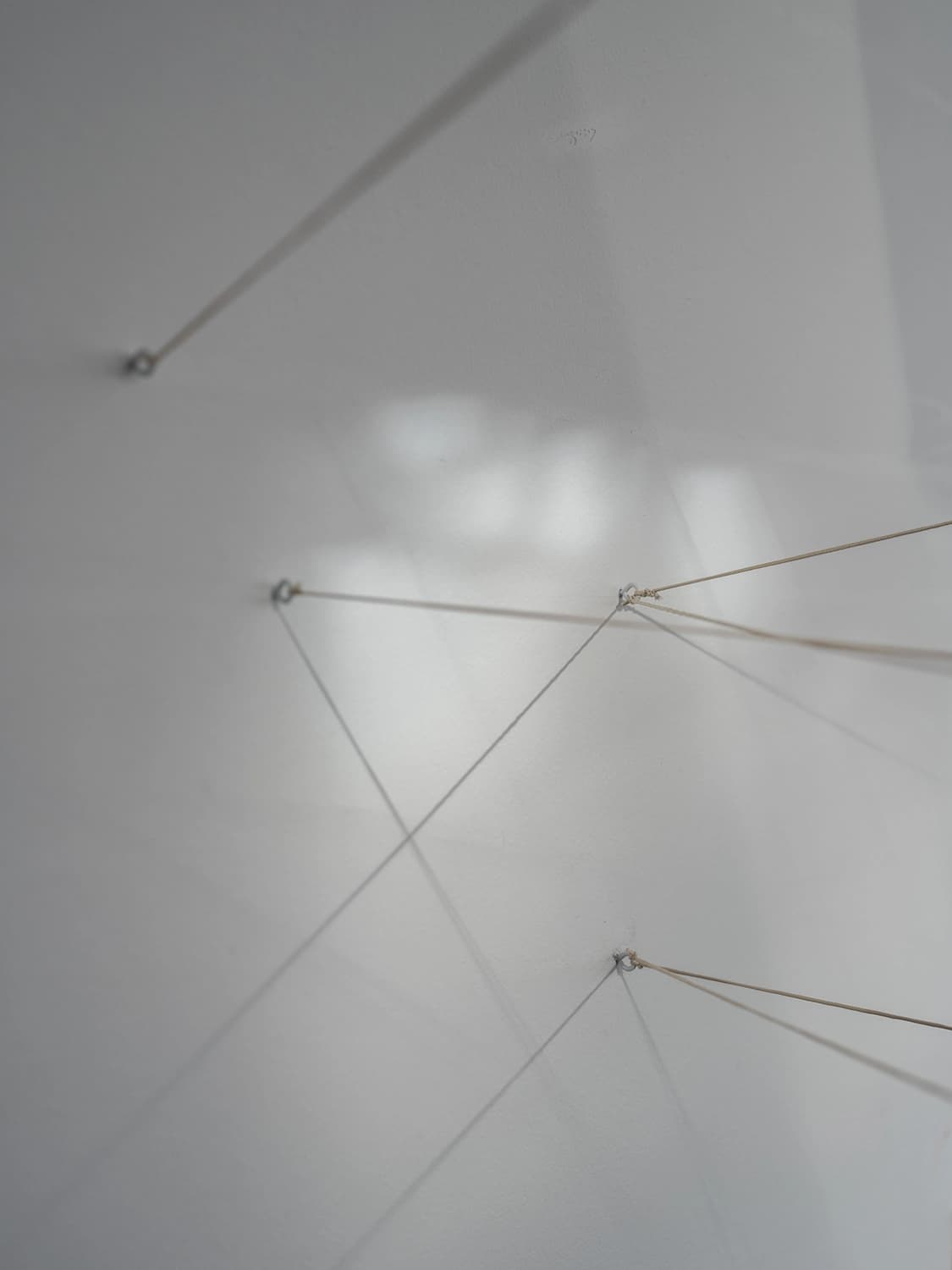
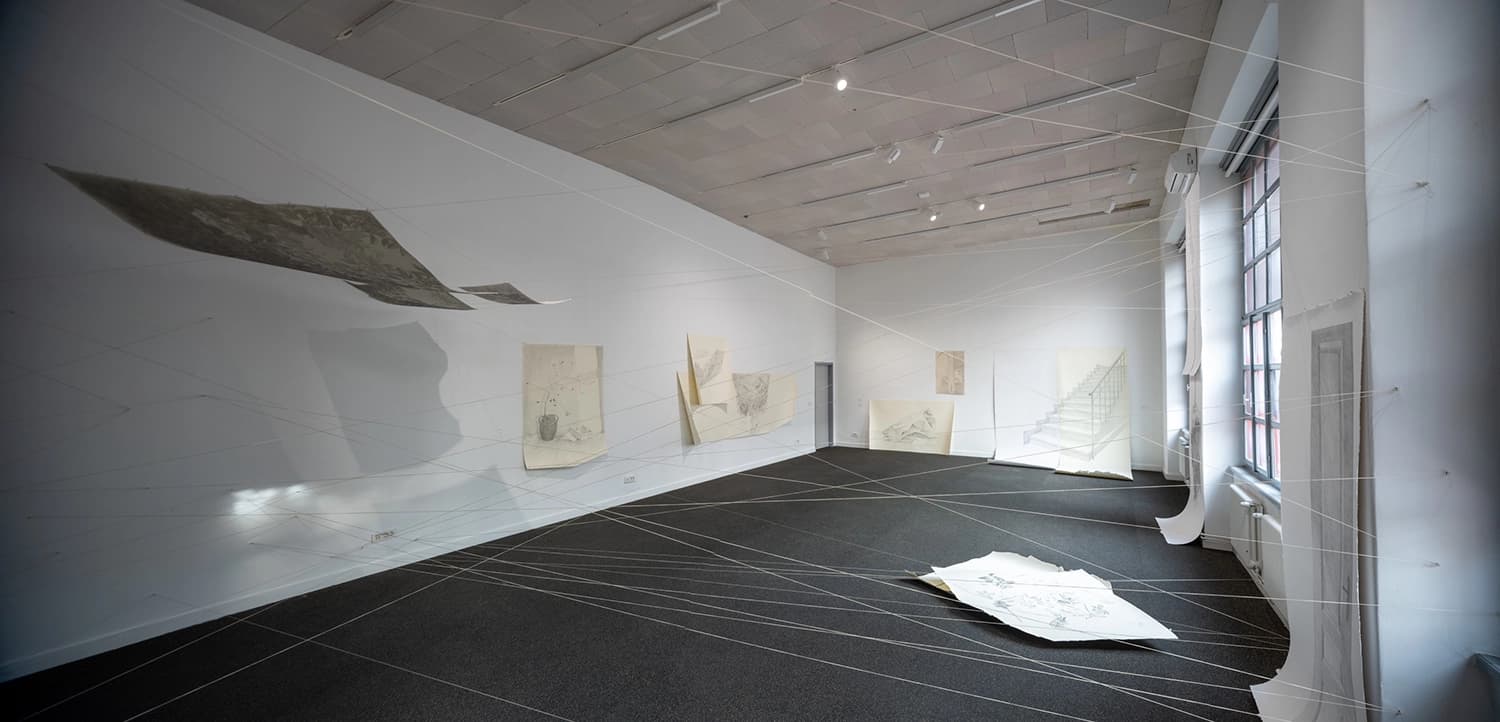
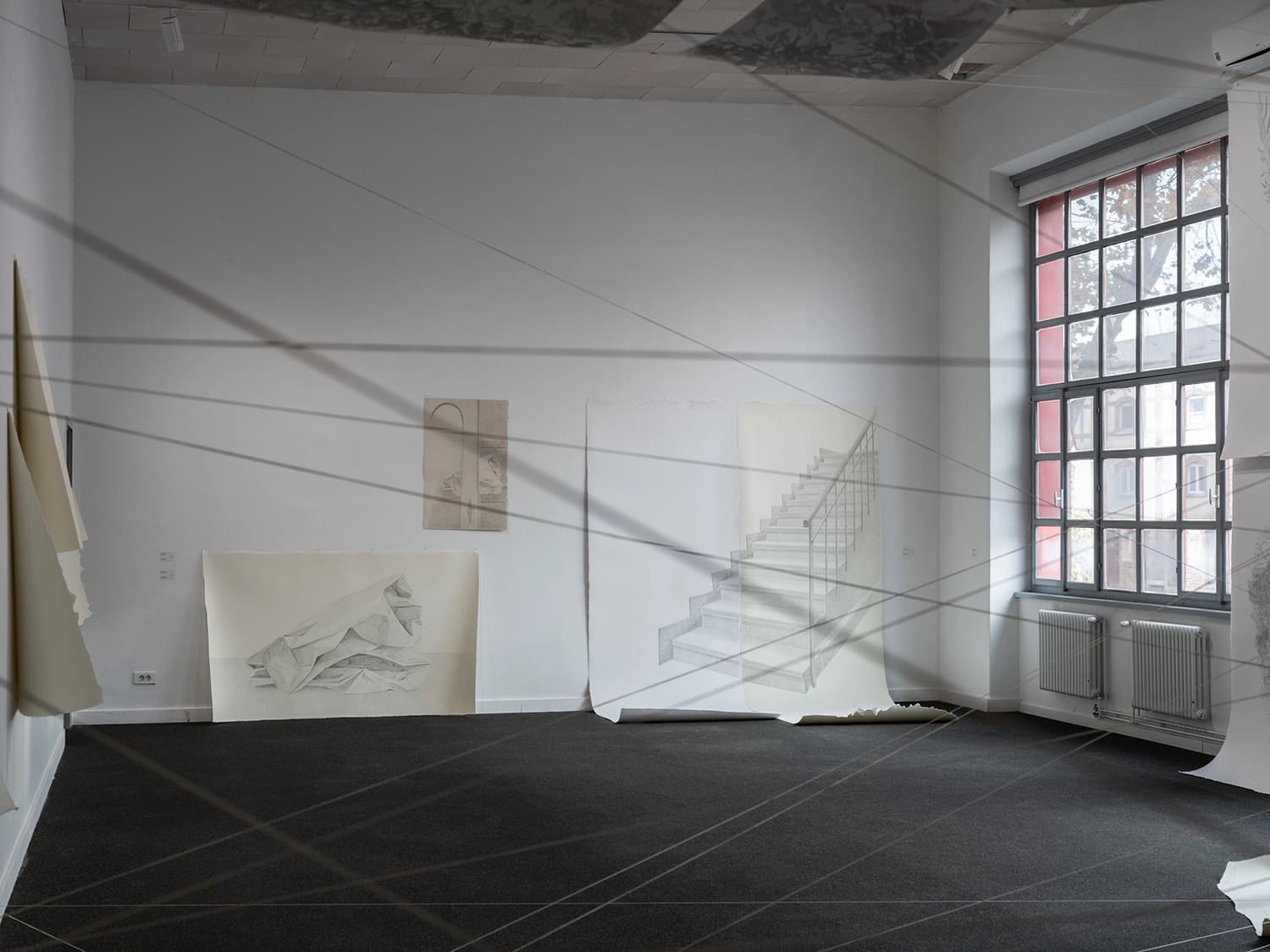
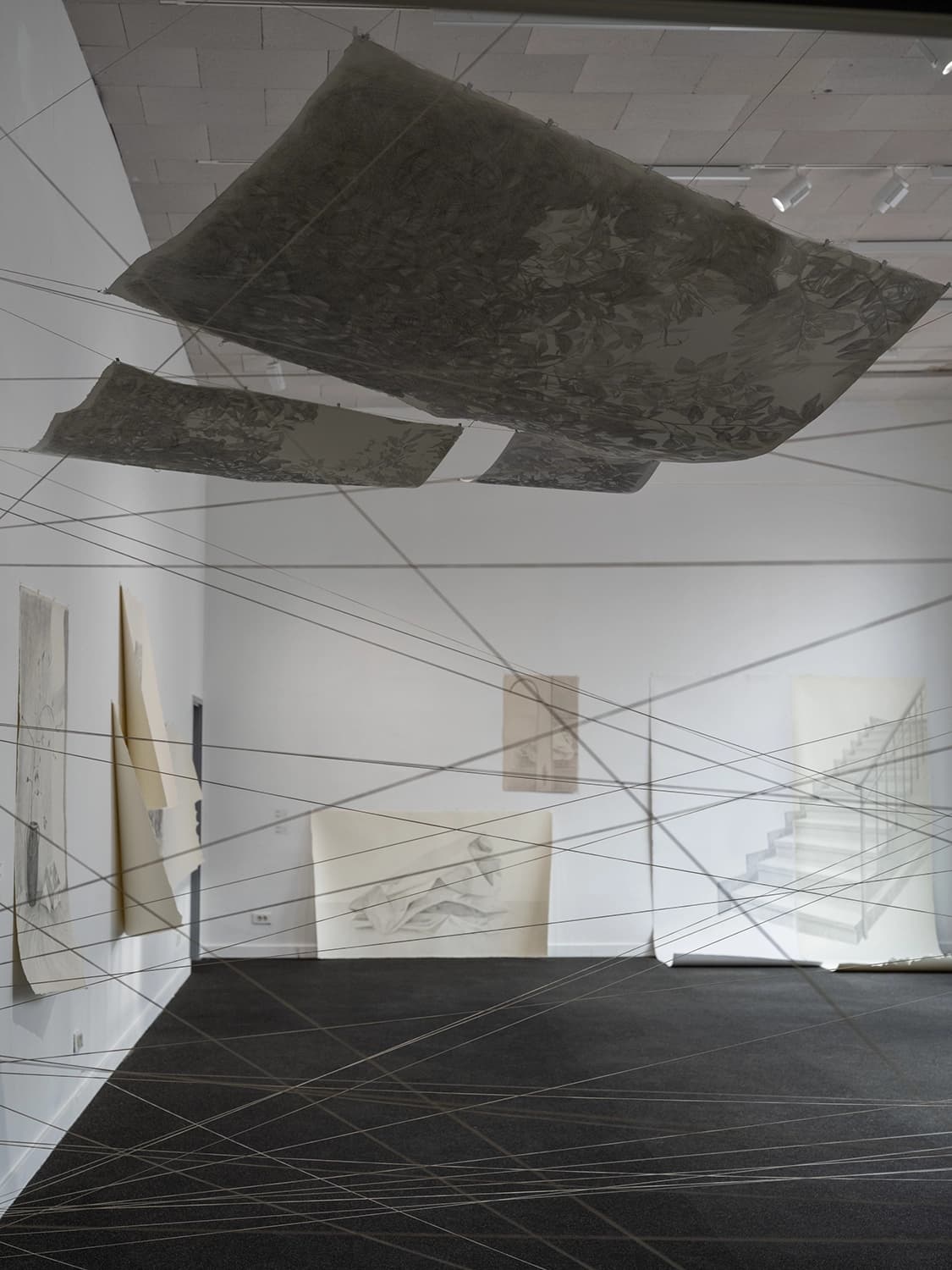
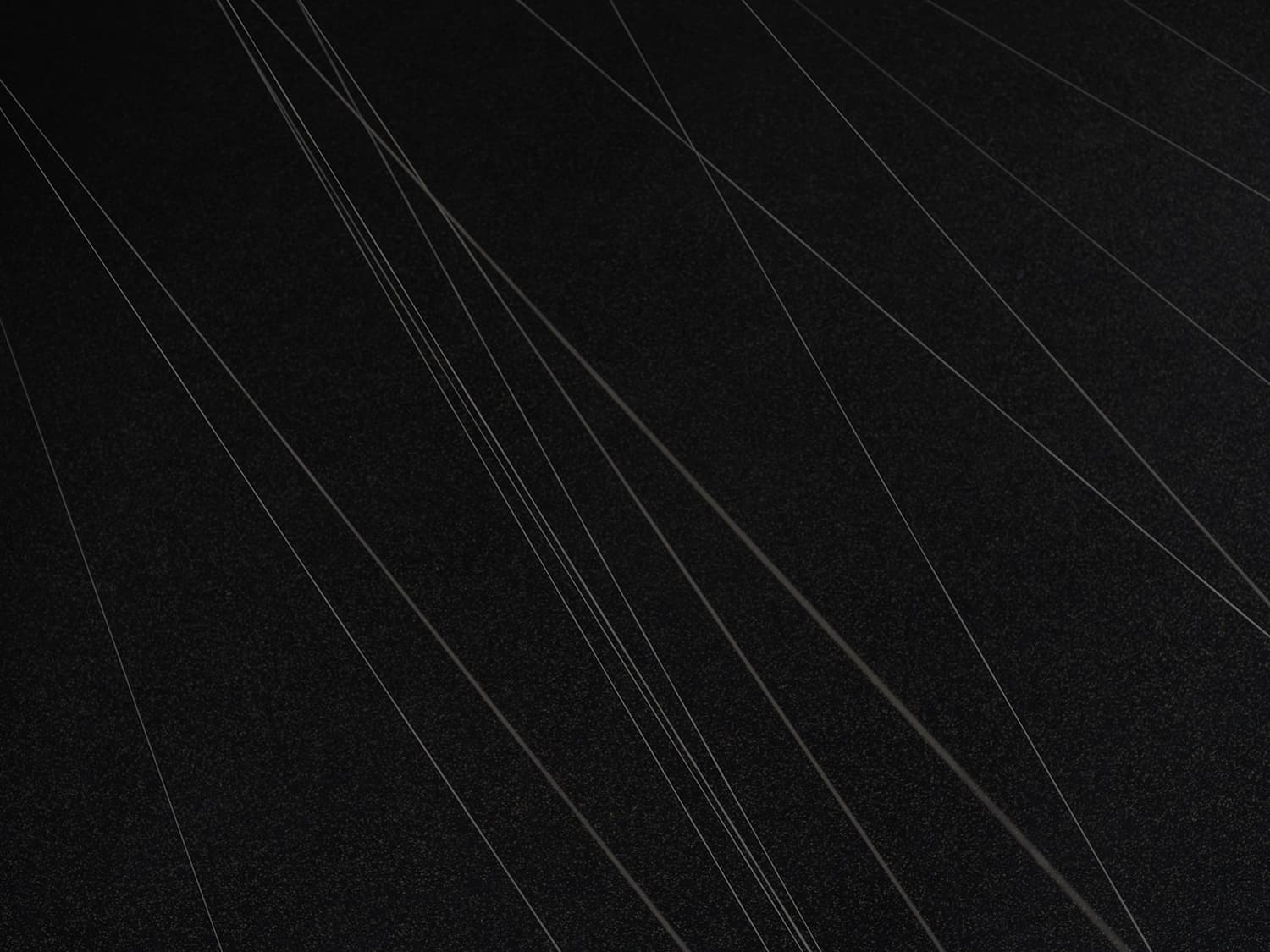
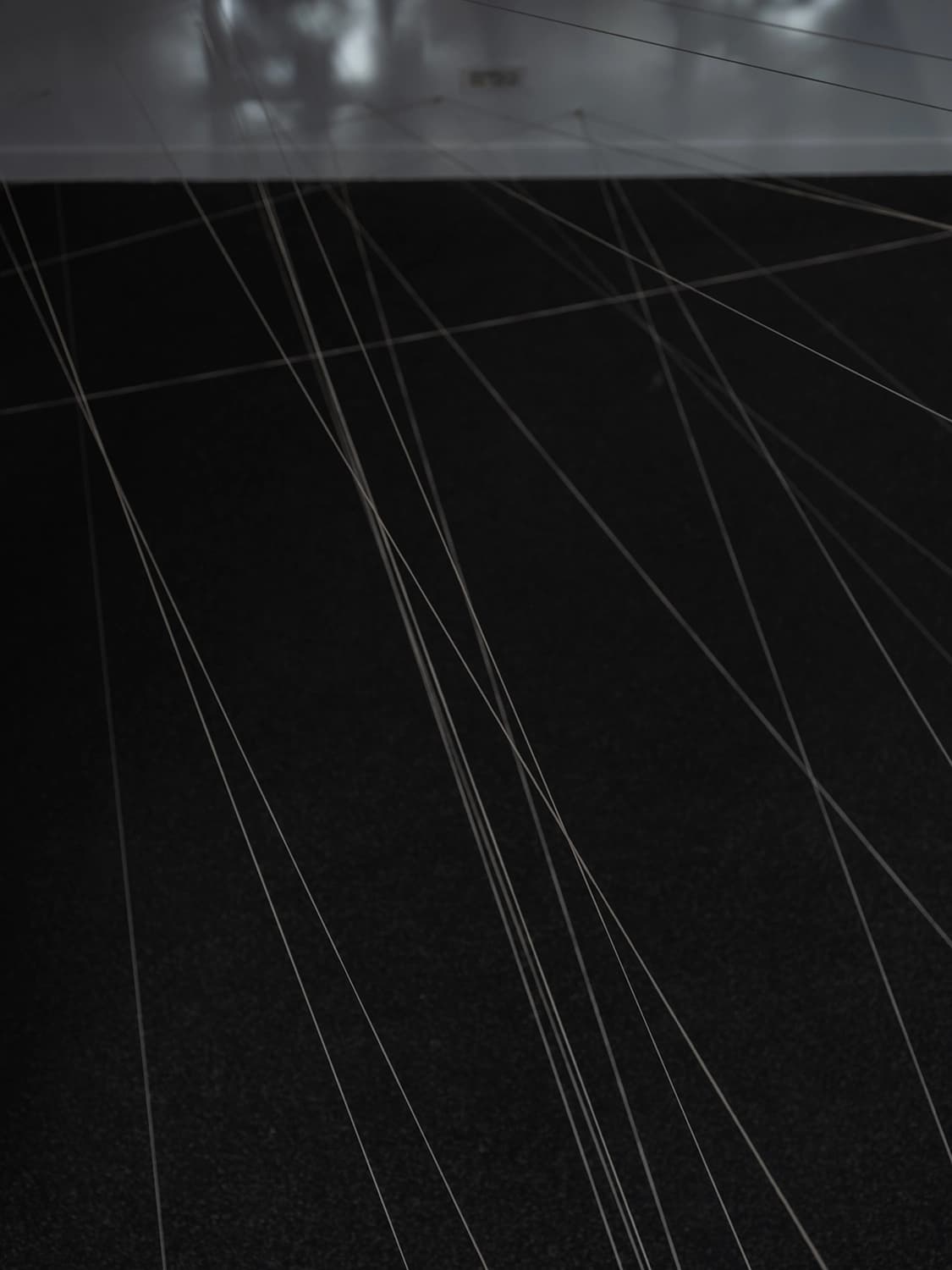
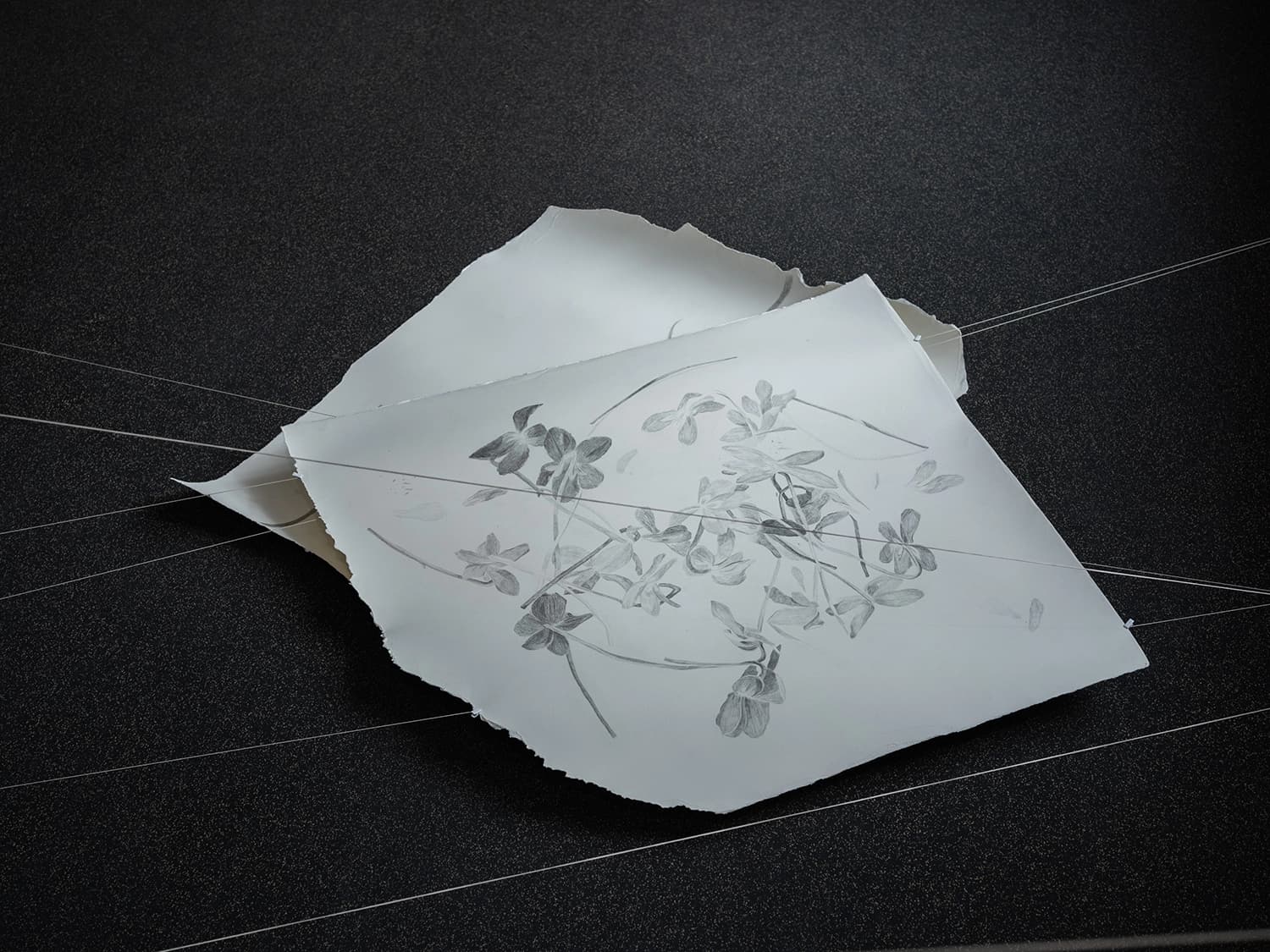
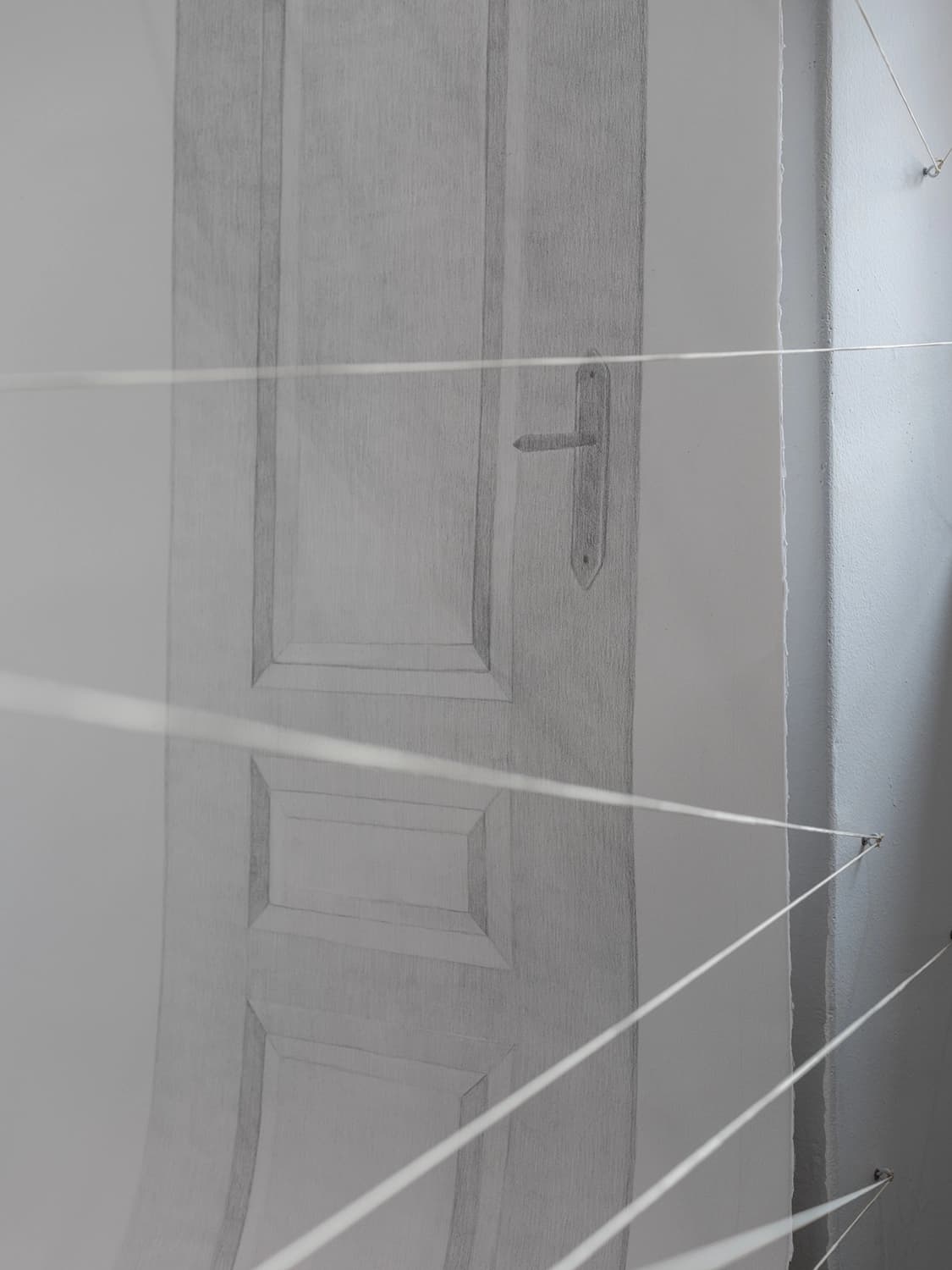
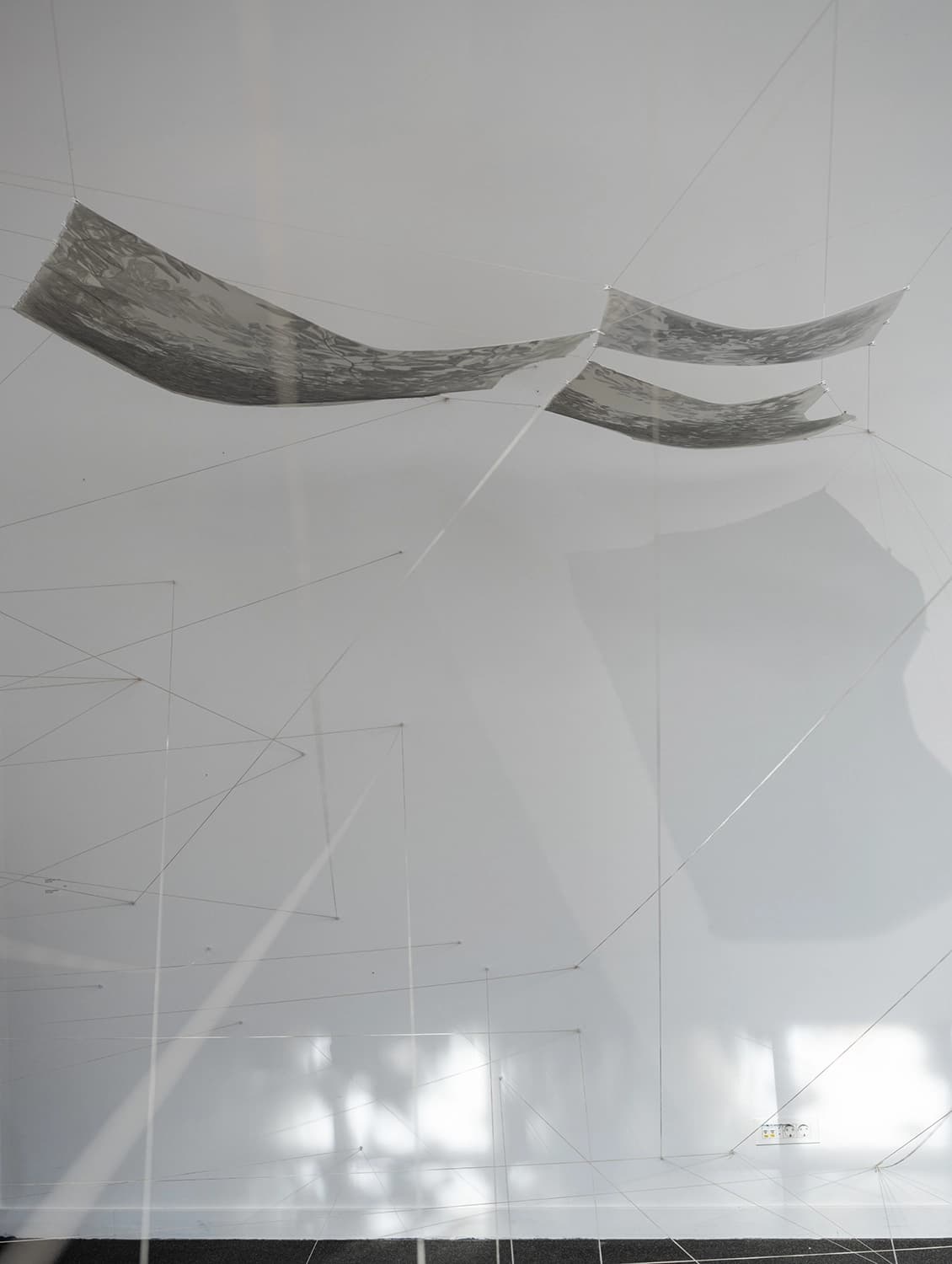
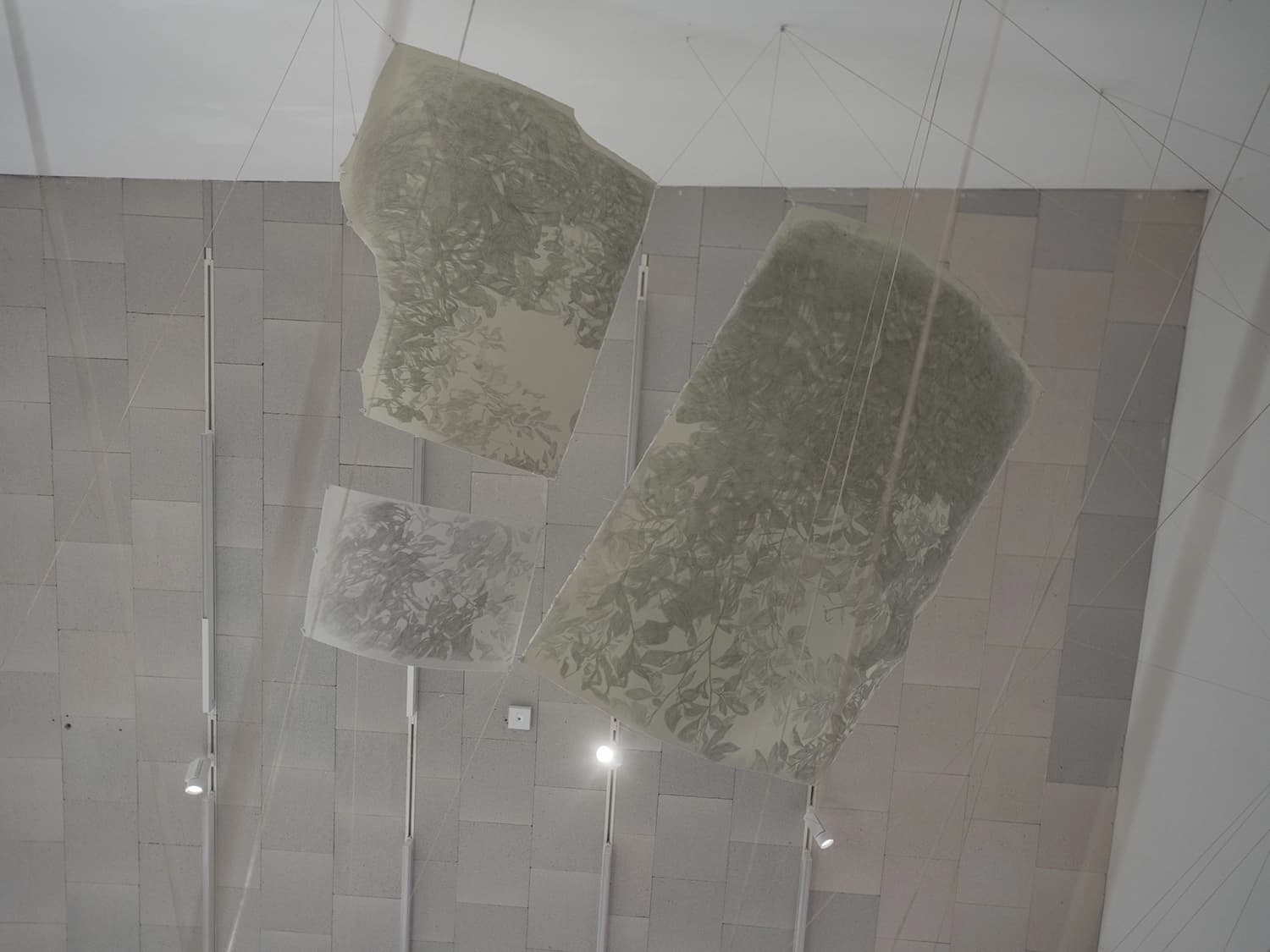
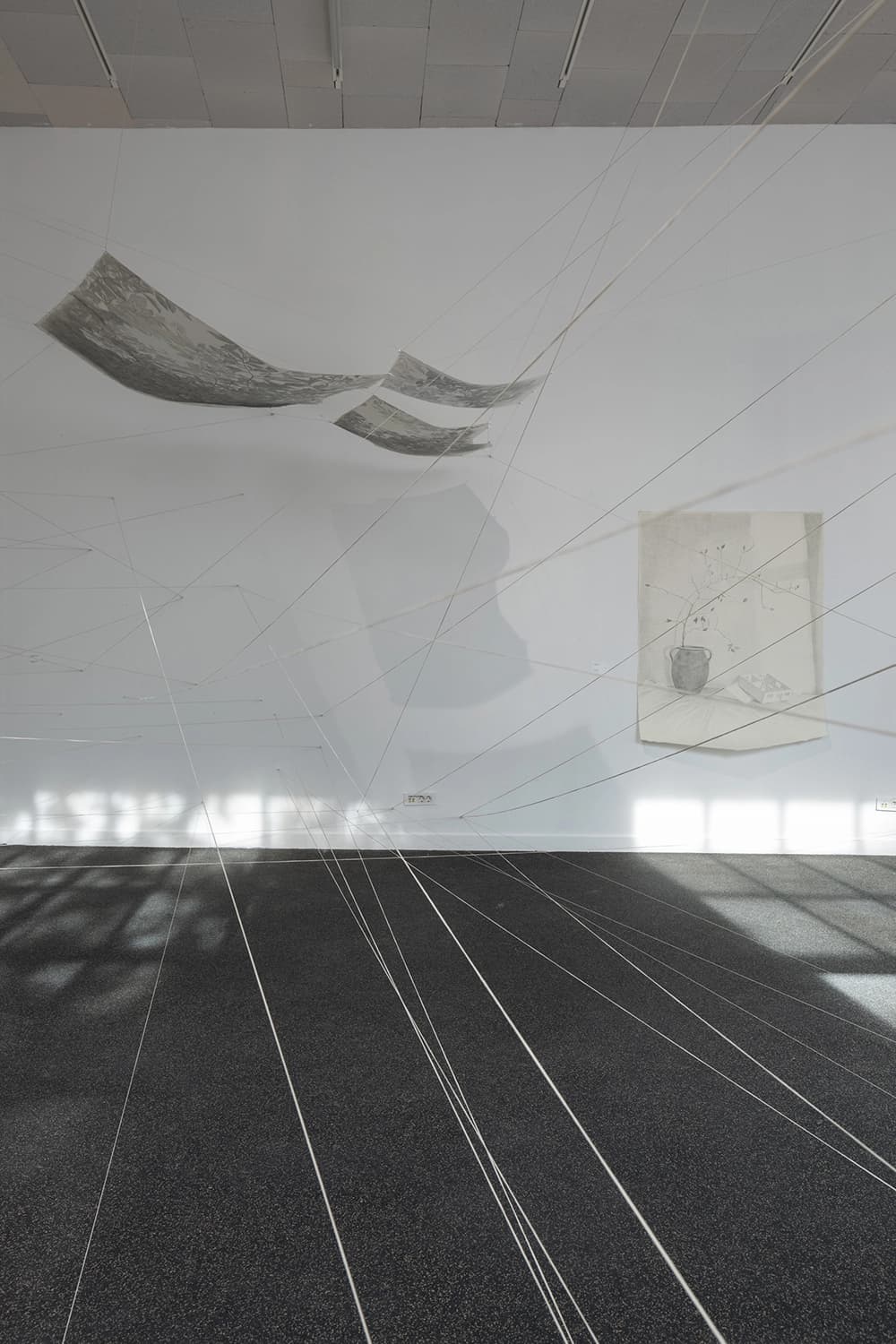
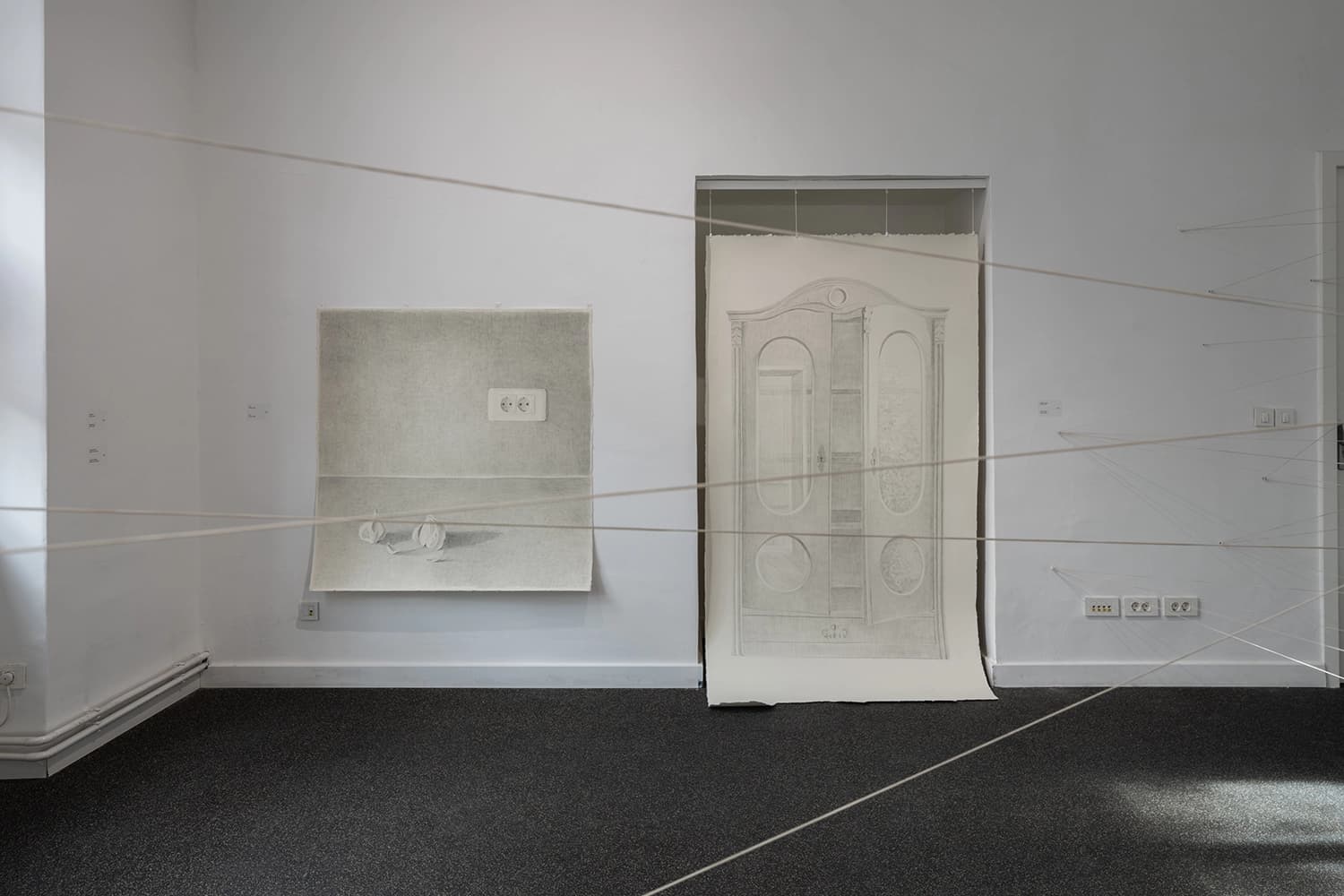
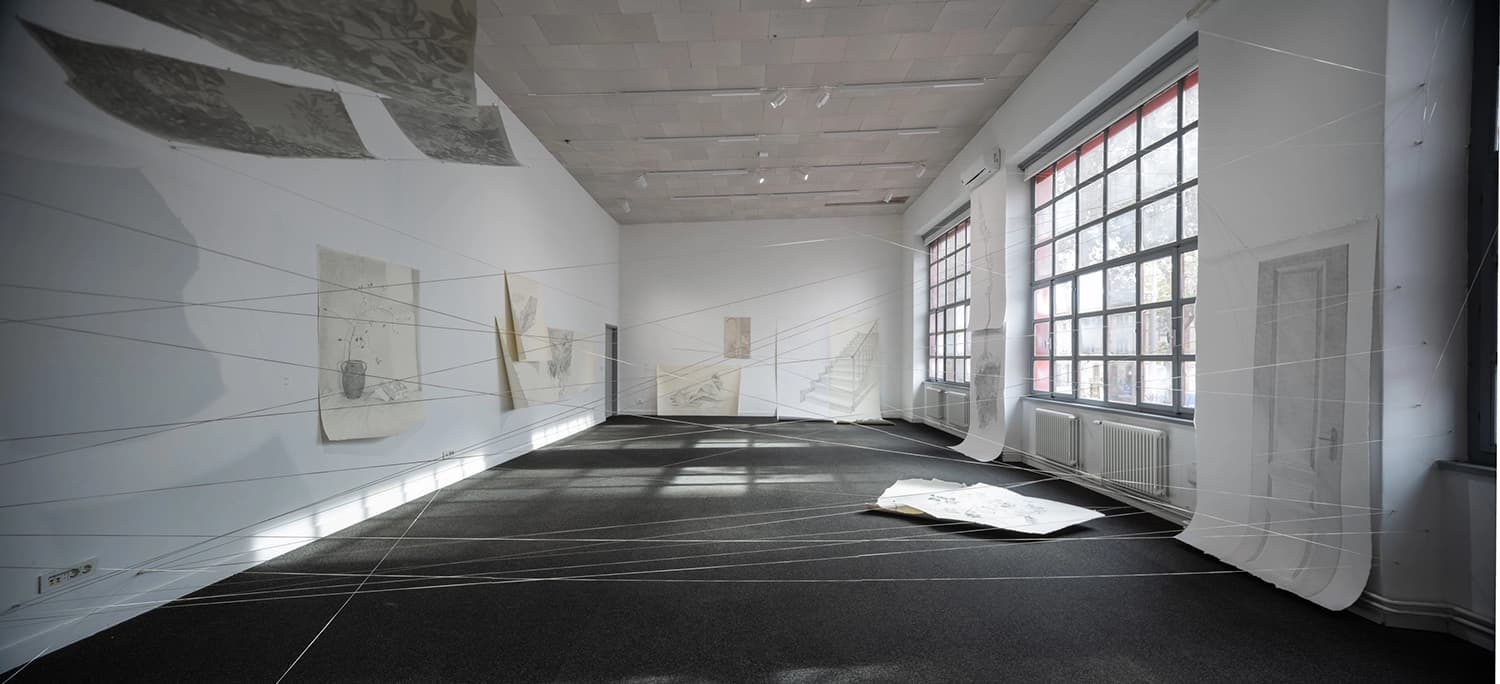
House Without a Ground, art installation comprised of drawings, is a narrative composition of complex and layered character in which Ines Matijević Cakić expresses various subjective experiences. It is formed with elastic threads stretched in space and positioned at different heights and directions, creating an intertwined network of lines. Drawings, figurative scenes, and details from the author’s home in pencil on paper are placed in the sections in between.
Ines’s entire opus is of a strongly auto-referential quality, and these features are clearly present in this work as well. Reflections on the past situations through symbolic images and motifs, contemplations of everyday life with its unexpected and unpredictable circumstances, and a variety of emotional states is seen in each individual drawing, as well as the installation as a whole. By probing into intimate spheres and by visualizing what has been experienced, Ines analyzes her state of mind, articulates new thought processes, and modifies perception and impact of certain personal moments. Her work provides her with space for creative re-examination through artistic practice.
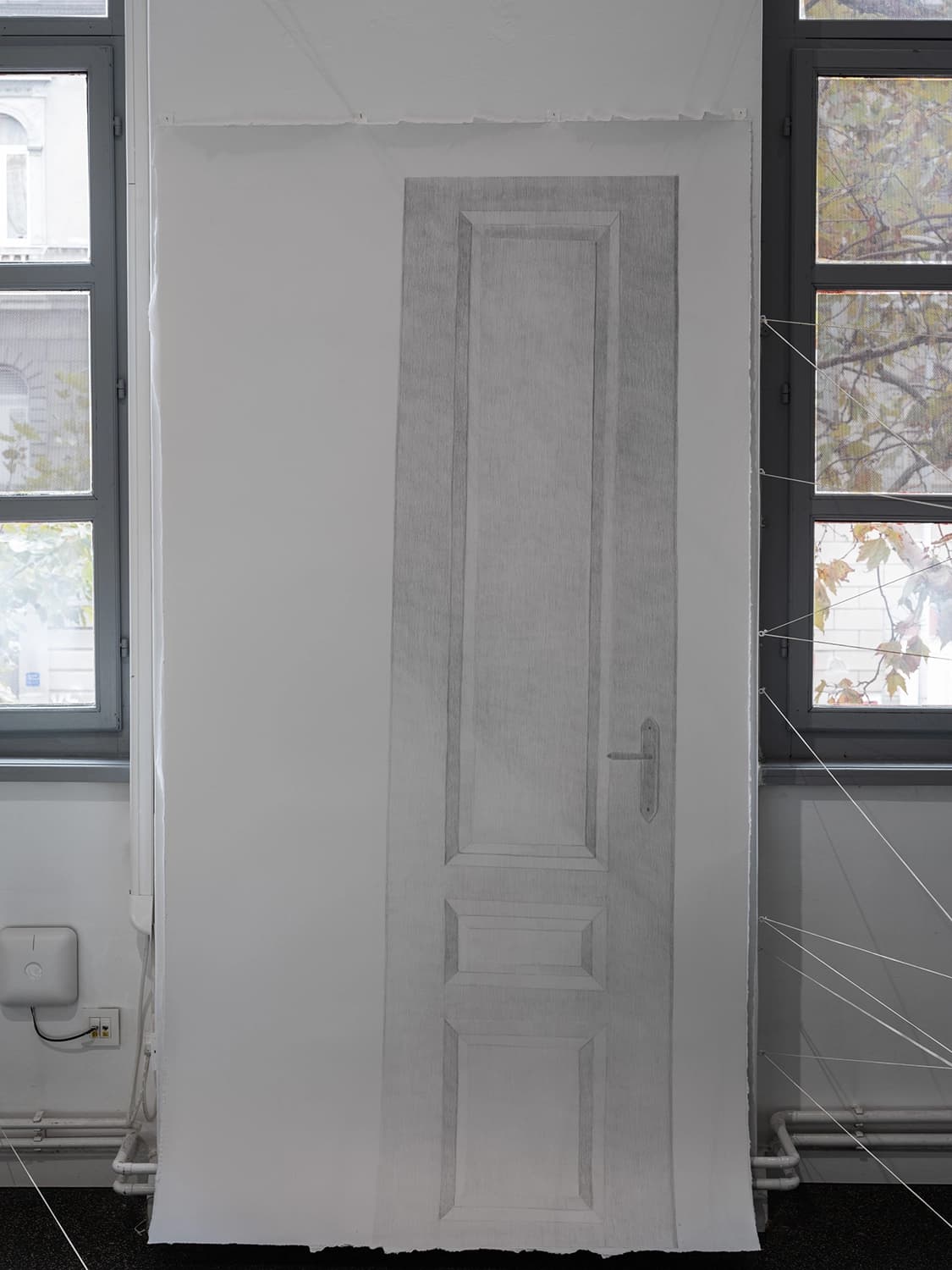
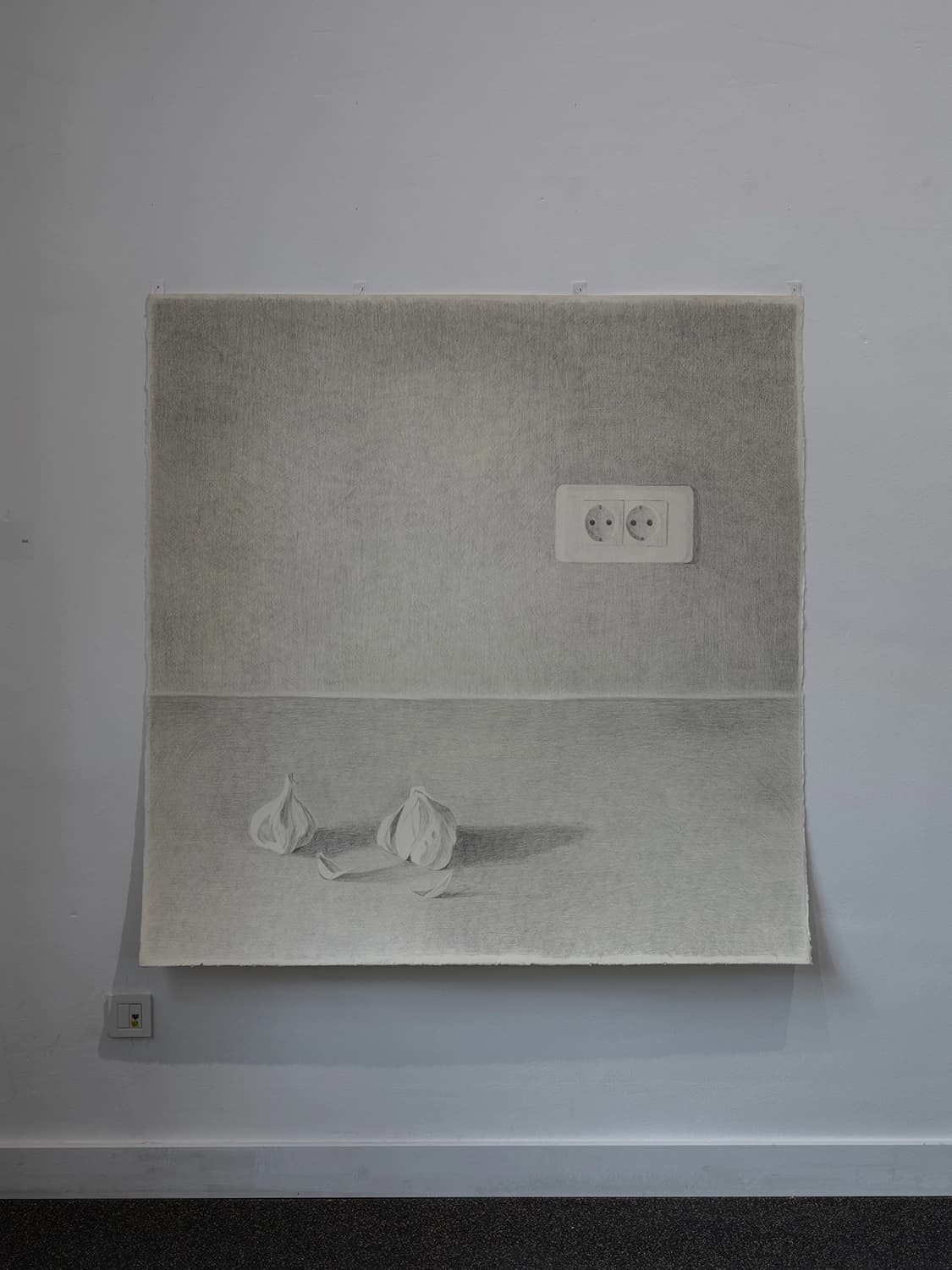
Every drawing in House Without a Ground is a scene from the artist’s home, and every detail is an attempt to ponder over certain life events. According to her own words, Ines sees her home as an extension of her identity, which could mean that home delineates and determines one’s personal identity, or at least the way identity reveals and exposes itself in the home environment in a most direct manner.
Study of the bonds between private and public space is yet another feature of the installation. Its content is projected onto contemporary society, on the world in which boundaries between private and public sphere are all the more fluid, while homes become places that are shared and exposed on virtual communication platforms. One of the starting points of House Without a Ground is an attempt to understand and make sense of private home space and public space, which in this case is represented by the museum exhibition area.
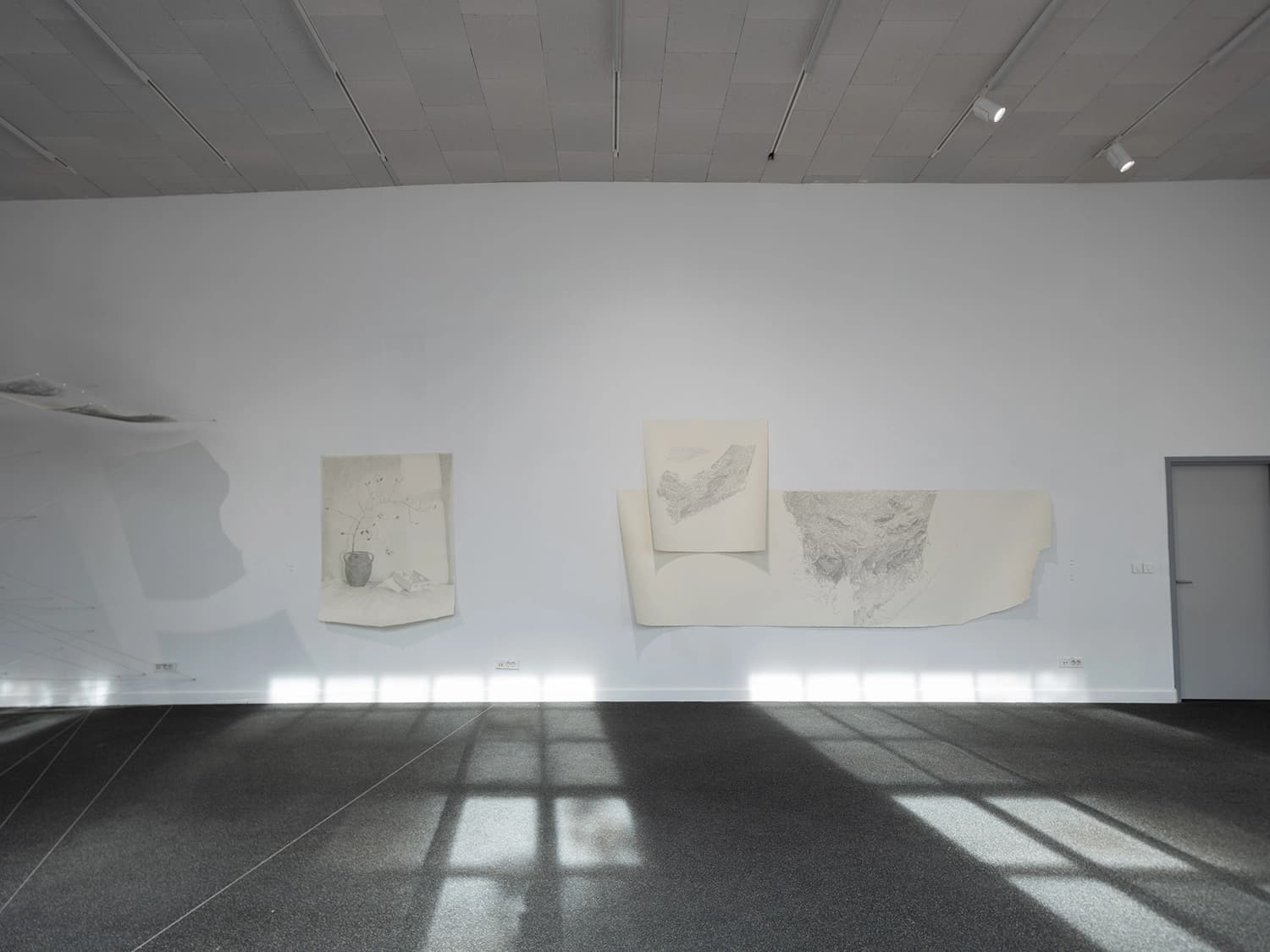
The dimension of space is an important factor in Ines’s work. Besides having a figurative significance, we also perceive it as a physical component in which the installation is materialized: the grouping of its elements is dependent on spatial arrangement, empty parts become integral components of the artpiece while the interrelation between the blankness and fullness are essential for the visual impression of the whole drawing. At the same time, the installation activates the space, highlights its special features and mitigates its flaws. Although House Without a Ground has been created for a specific space where it would be placed, it is modular and can be adapted to any exhibition setting.
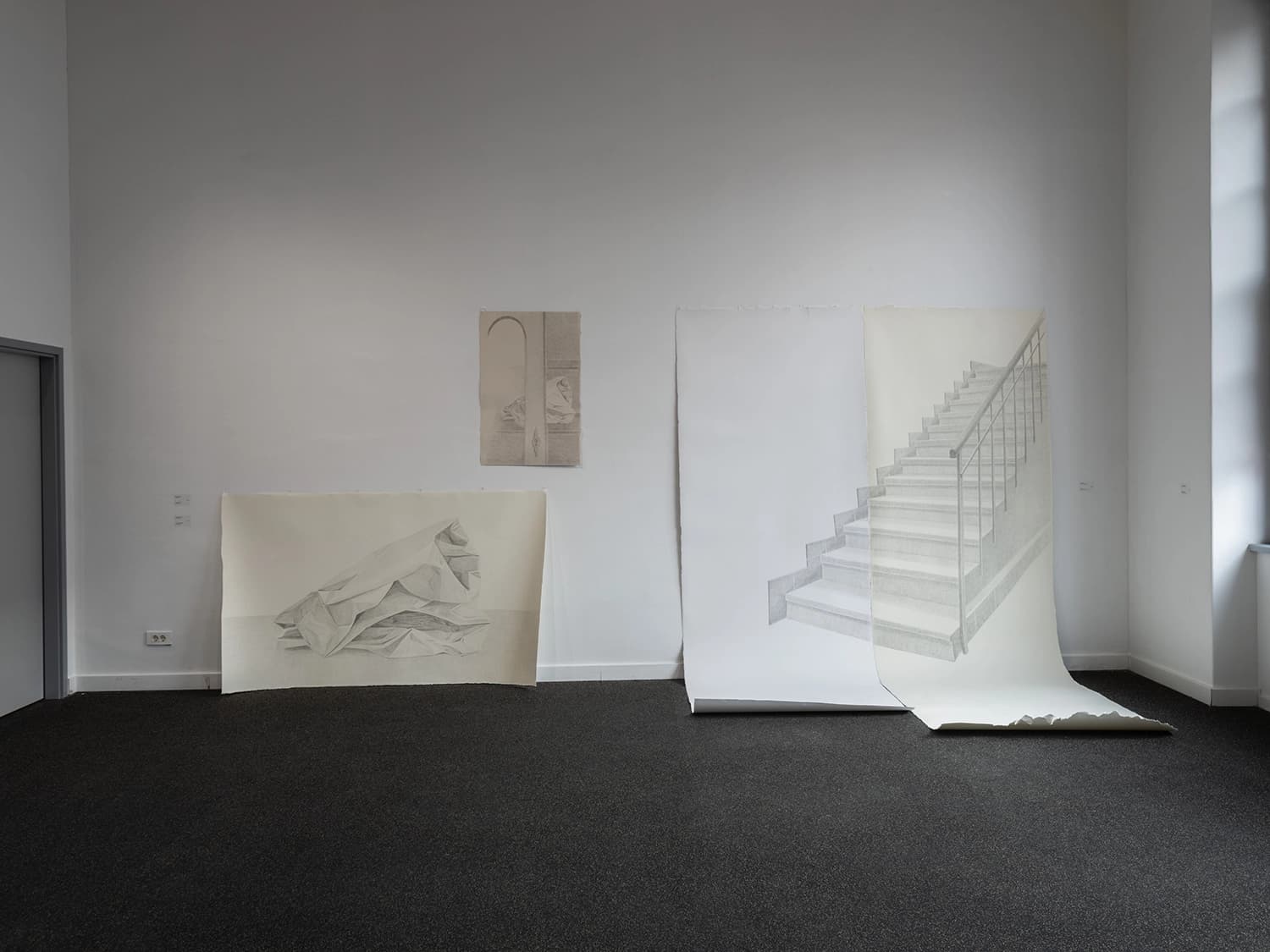
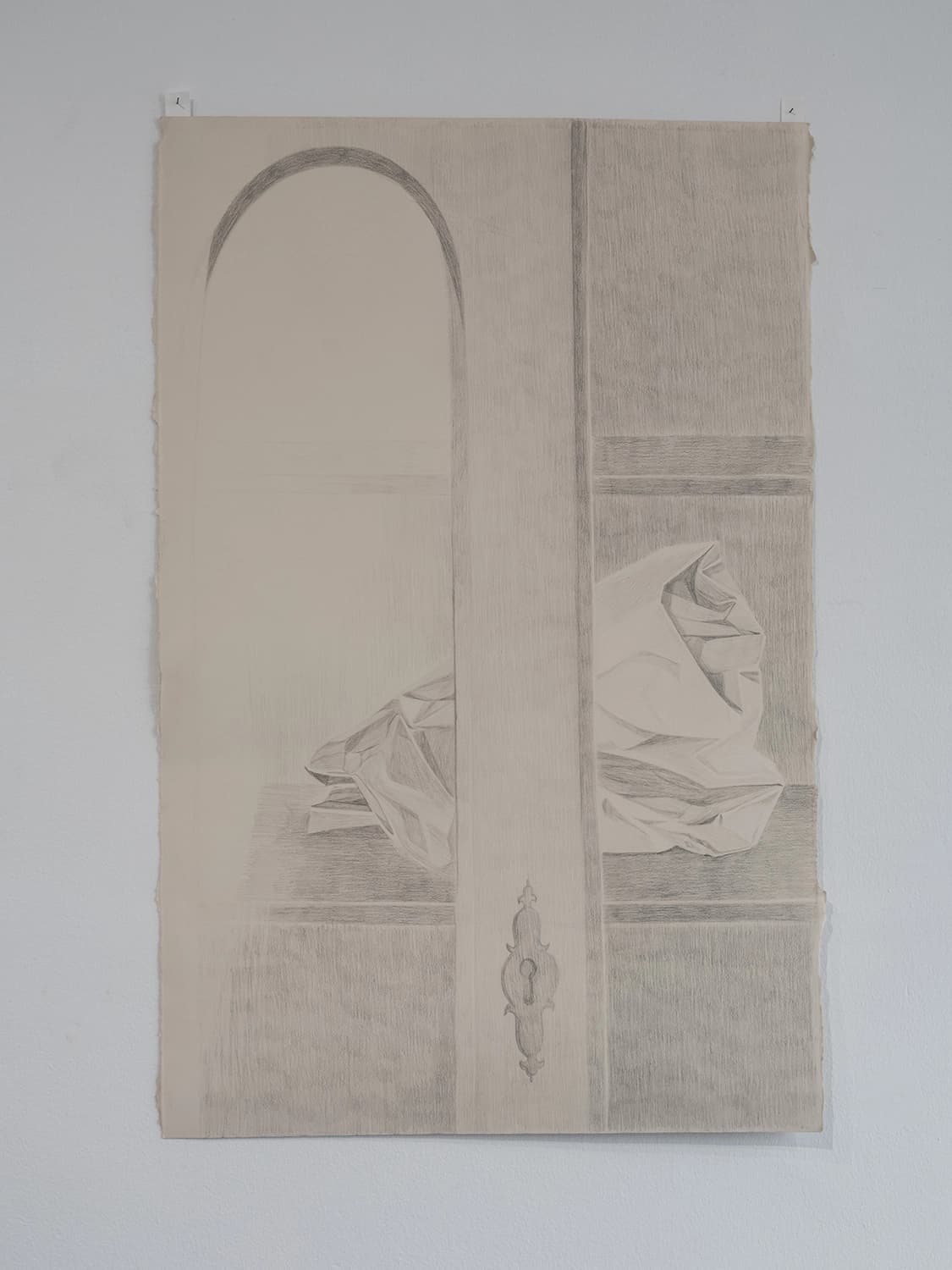
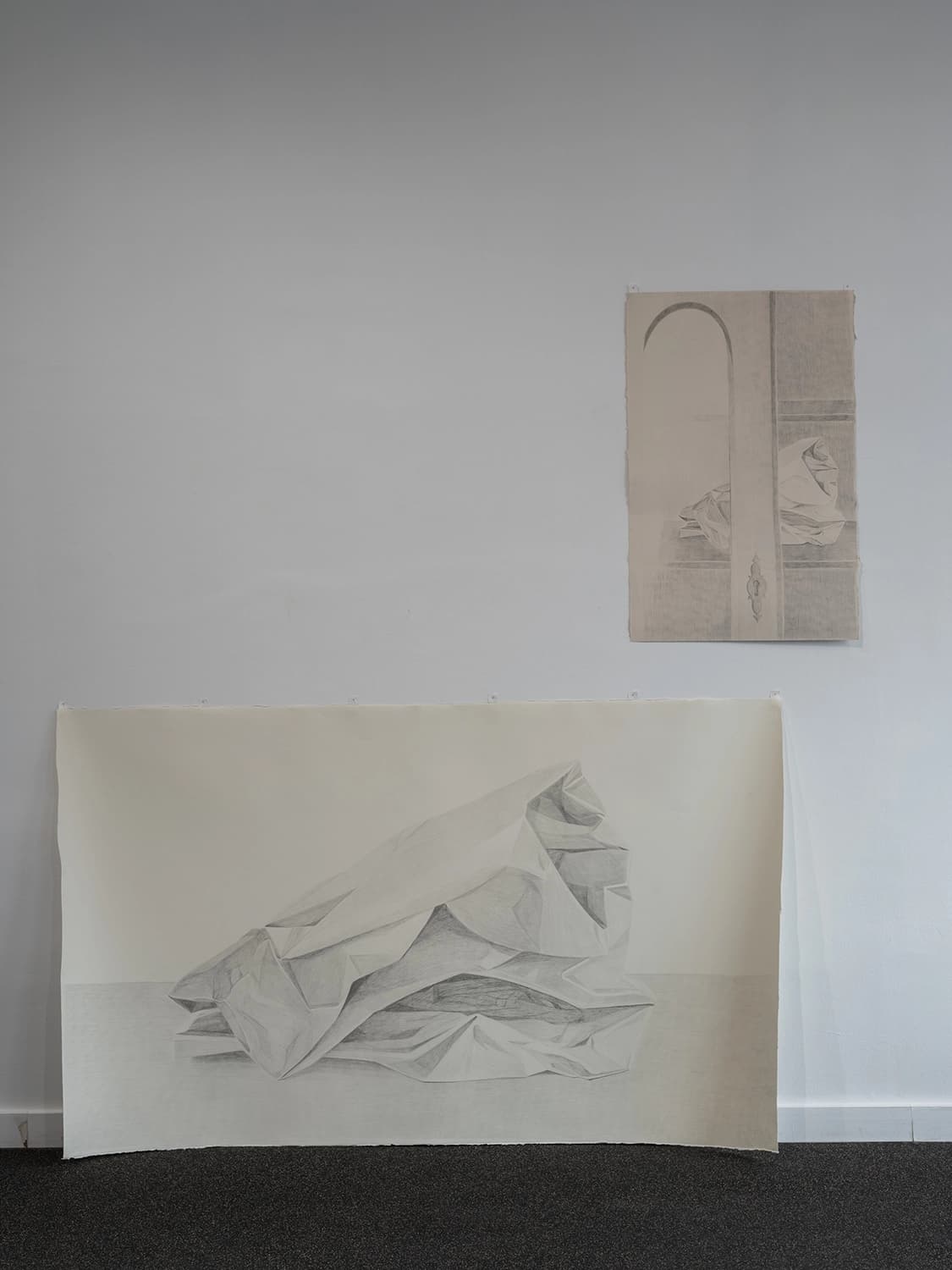
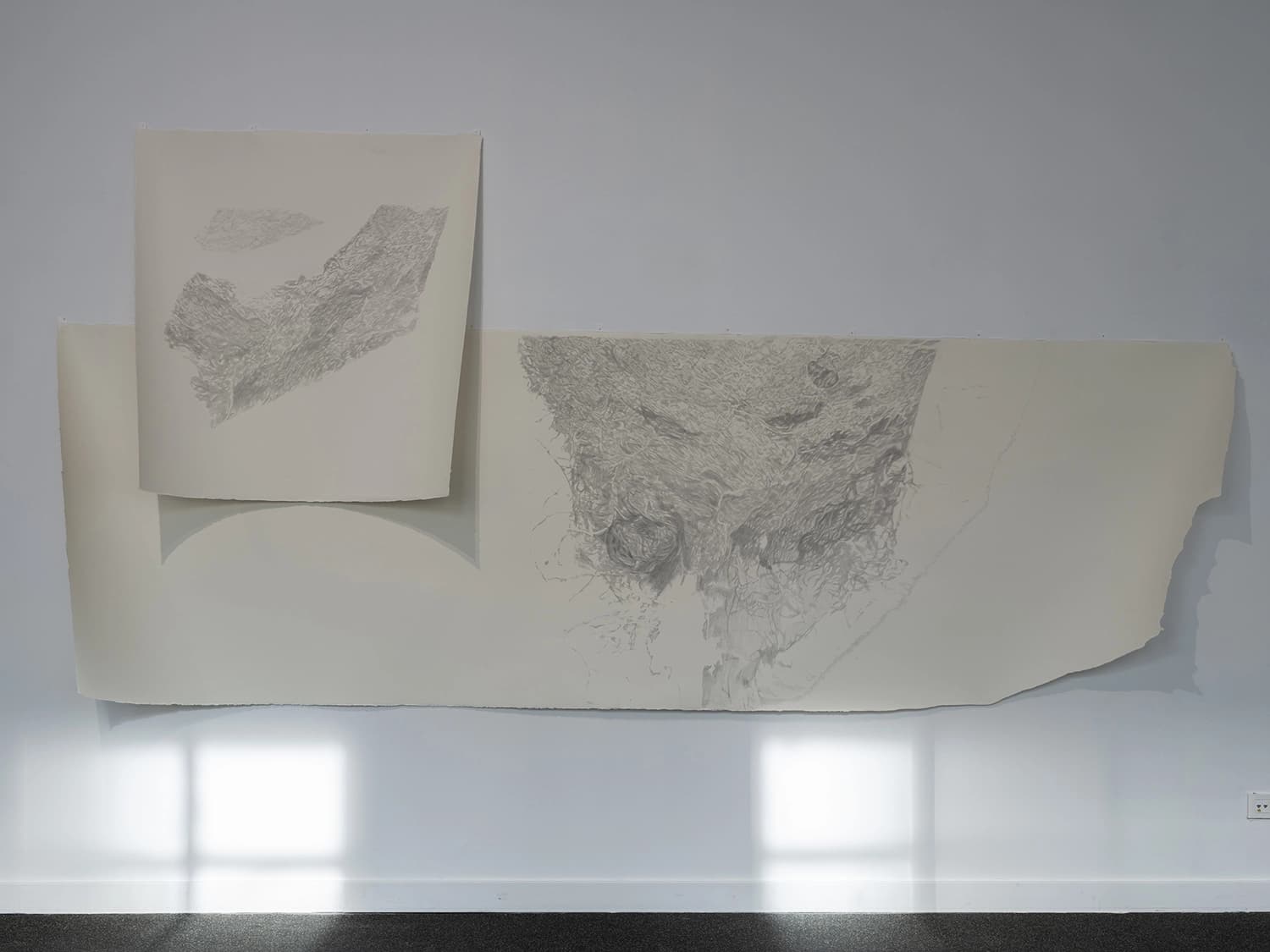
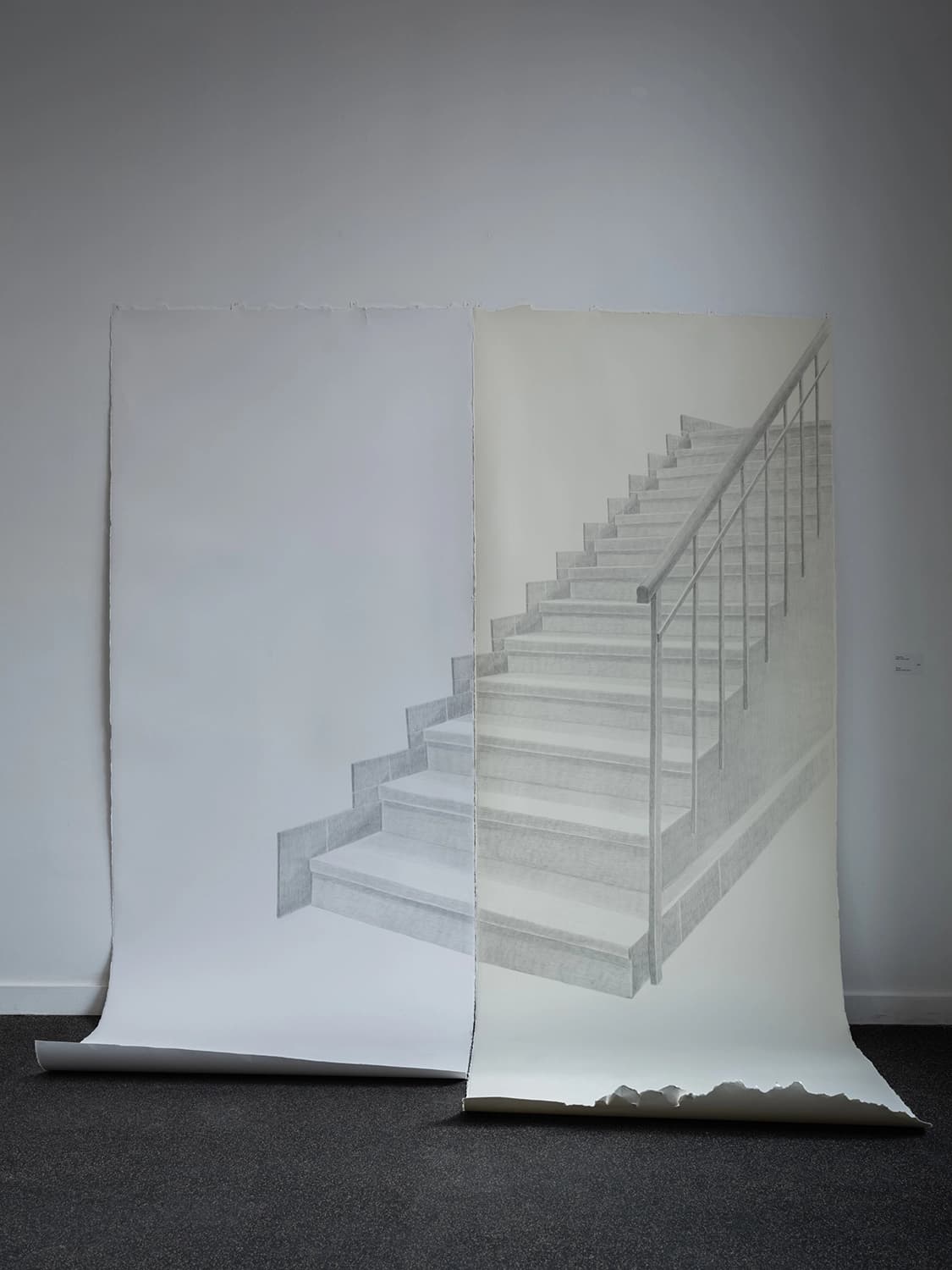
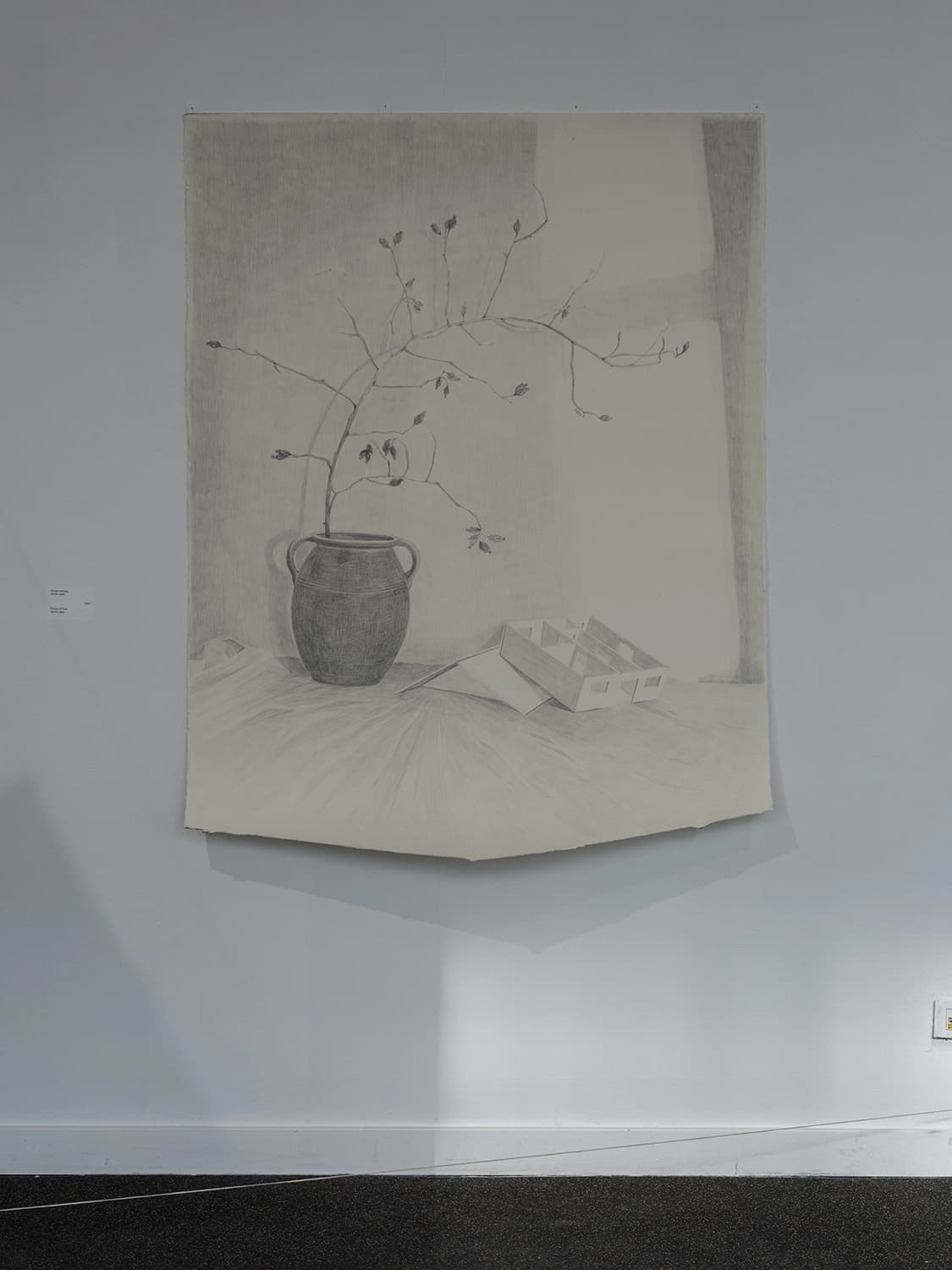
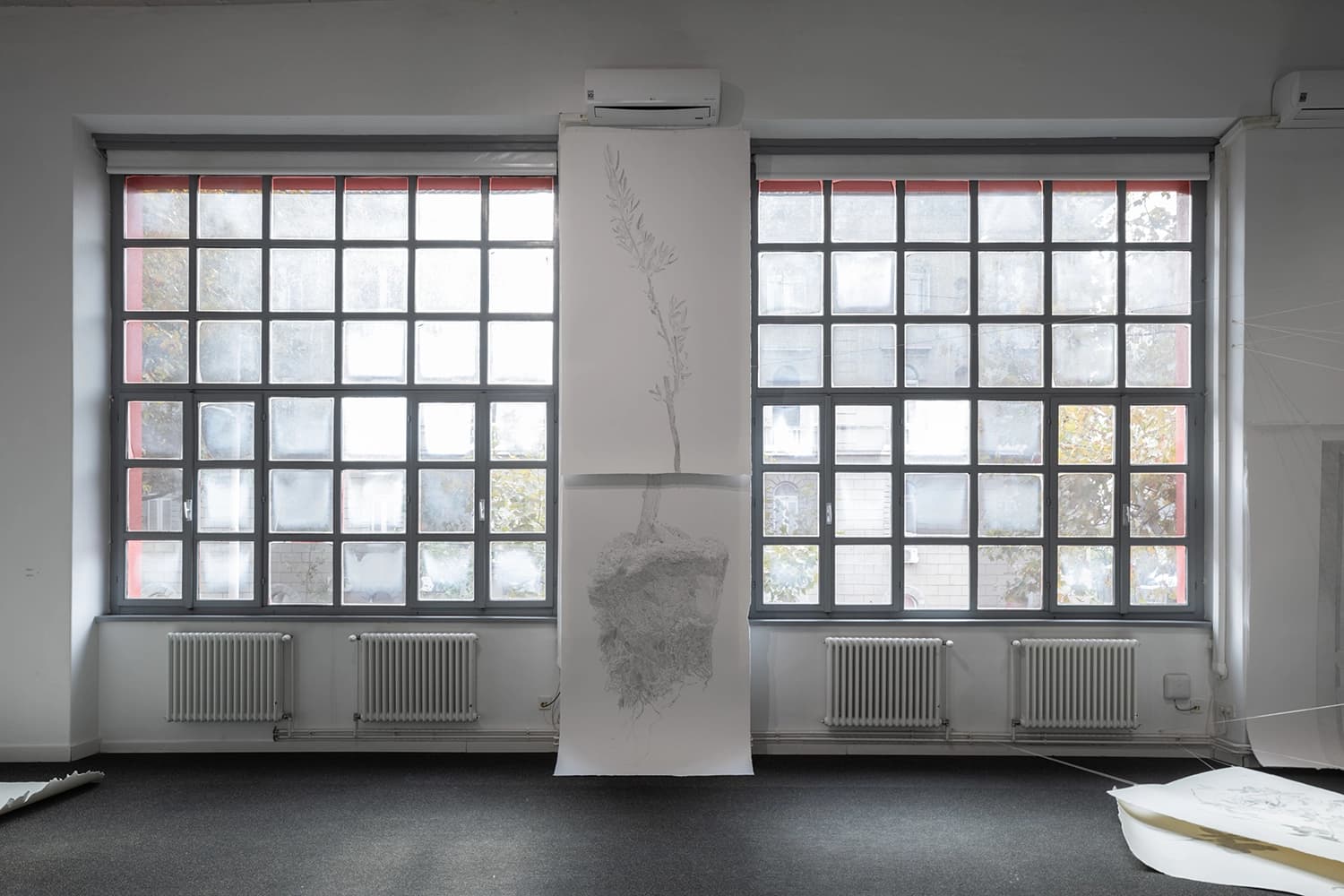
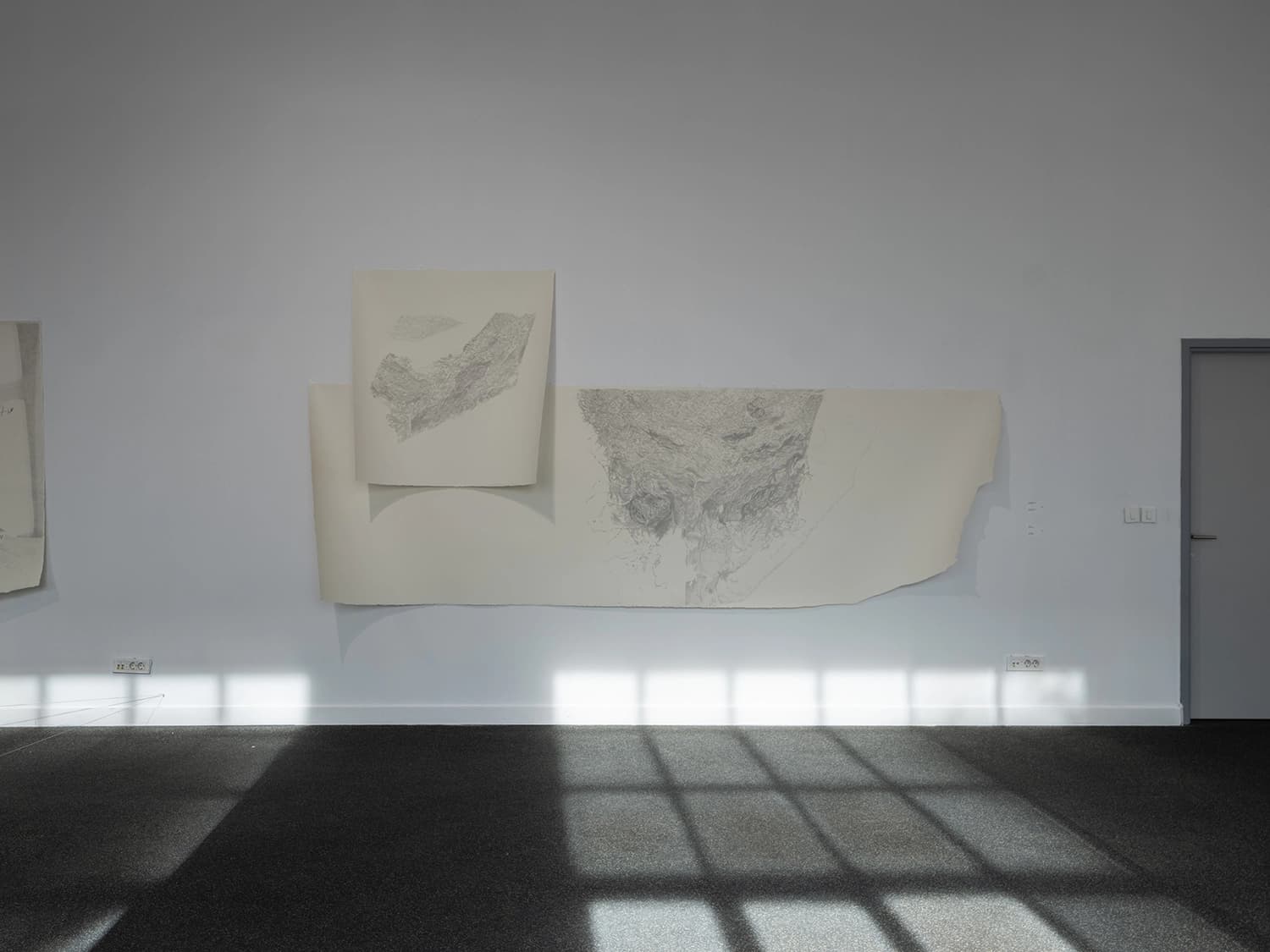
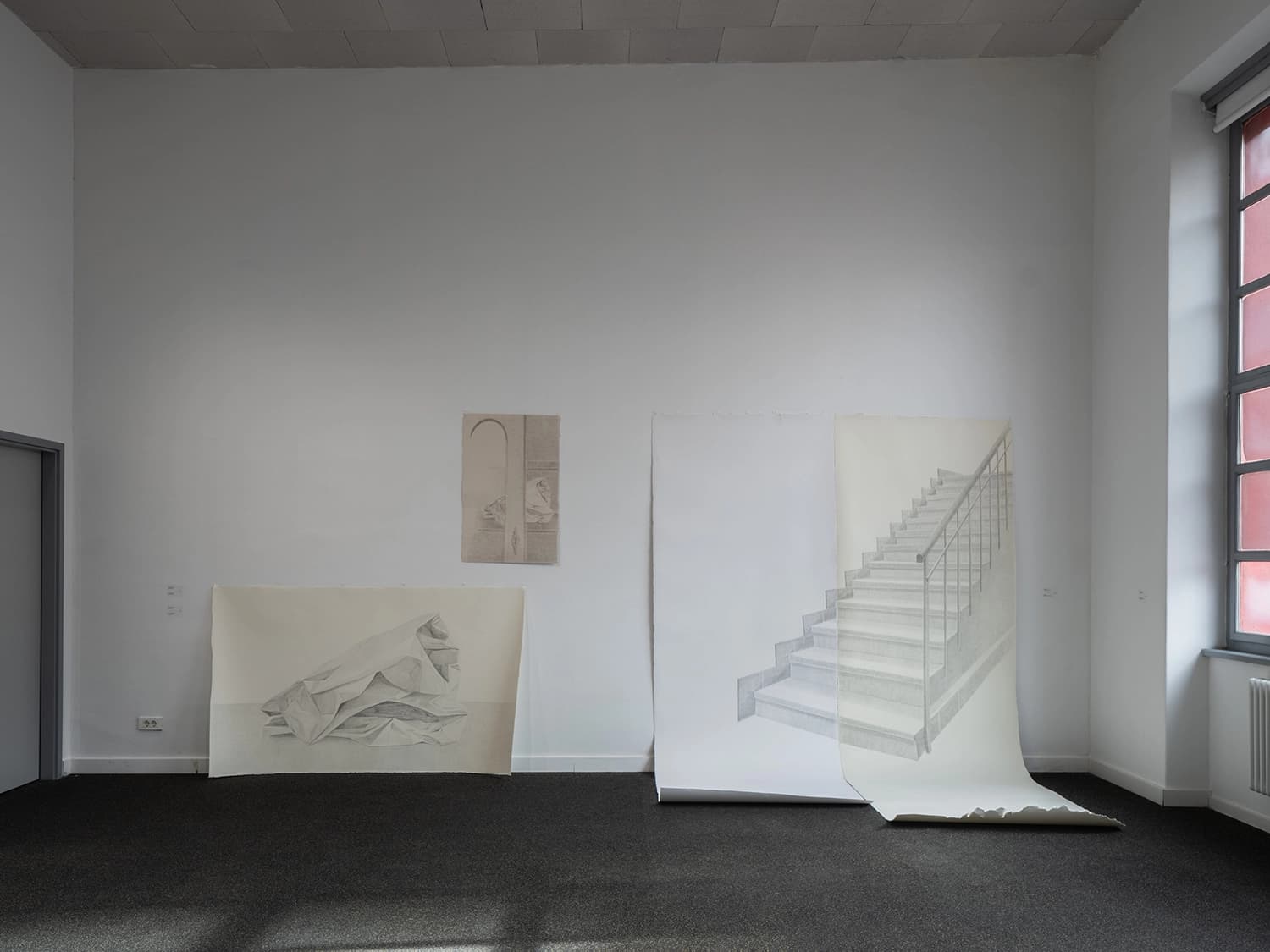
The exhibited drawings communicate both with the space and the elastic threads installation, and at the same time complement and permeate each other thematically and contextually. Glass Eyelids, as the starting point in the installation, is a piece of furniture from the author’s home, a china cabinet in which the internal and external space are reflected: vegetal motif (leaves) and architectural element (door). Drawings of identical motifs are displayed in such a way as to relate to the actual features in the author’s immediate surroundings. Next comes the drawing named Hindered Growth, an image of an olive tree ripped out of the soil, with the exposed roots conveying a symbolism of duality: the roots stand for firmness and safety while simultaneously hinting at possible fragility and impermanence. A drawing entitled Grounds shows an enlarged detail of the root, just like Framed Surface shows an enlarged detail of the china cabinet, with a crumpled piece of paper in it. Paper is a medium that records something and is written on, it retains thoughts and different information that are to be safeguarded for good or just notes that are not meant to last. Both situations suggest the flow of time. The previously mentioned Formatted Surface shows an enlarged crumpled piece of paper that can be associated with a sheet of paper containing architectural or construction blueprint. Architectural motifs appear several times in House Without a Ground. One of them is a staircase with a landing. The staircase symbolizes the idea of ascending, a shift upwards or descending, in this case coming down to the ground of the house, to the base, to the artist’s home.
If we view the overall artistic production of Ines Matijević Cakić, it becomes obvious that her artwork is a result of an ongoing dialogue with her personal experiences; in the same manner, the installation is inspired by the circumstances in which Ines finds herself, more precisely, the situation when her house was being renovated and its foundation exposed, all of this happening at the same time when the COVID pandemic and a strong earthquake occurred. The atmosphere of uncertainty and fear has been transferred from the external to a personal level, while the visual records reveal thoughts that emerge in unfamiliar and hopeless situations.
Large format pencil drawings on paper with motifs of spaces in which the artist lives, details of the interior and vegetal items are executed through meticulous toning of light and shade. The artist uses graphic paper that absorbs the pencil pigment well, resulting in pronounced softness of the drawing. The edges of the paper are torn by hand, some with more precision and others roughly, to highlight the unevenness of paper. This method emphasizes the genuine nature of the medium, that is, drawing as a basic technique that notes down the original idea and initiates every piece of art.
Drawing segments in the installation are connected with stretched elastic threads which give an impression of lines extended into space. The intervention is thus perceived as a drawing with an added dimension of spatiality. At the same time, the dense network recollects the artist’s childhood games in which counting rhymes accompanied the weaving of threads creating complex forms that had to be untwined and unraveled. In the like manner, one has to find solutions to real life situations that sometimes seem desperate. Associations to children’s games represent a ludic element that lightens the real-life burden.
In her House Without a Ground, Ines Matijević Cakić deals with themes of a long-standing artistic interest. She talks of an intimate living space, expresses her experiences related to home and family, explores emotional states of fear, uncertainty and instability caused by external circumstances beyond our control. By positioning threads into space, she visualizes the idea of a corridor, of finding a way out of unfamiliar and uncertain situations, which we may interpret as her contemplations on a personal level, but also more generally, as thoughts about circumstances in the society.
Vilma Bartolić